Part Three of a “You Are There” experience at the Summit on Pluralism by reviewing these notes submitted by Paulist Father John Geaney and consolidated in bullet points by Yours Truly. Find links to presenters and panelists for your own edification.
DAY ONE CONTINUED: Thursday 23 June 2023
BREAK OUT SEGMENT # 3 Overcoming Racism: The Role of Religion and the Faith Community.
To me, PJ Andrews seemed almost overwhelmed engaging in the Baha’i commitment to bring all faiths to confront racism. Trying to bring interfaith religions together, particularly around difficult issues is an unsettling journey at least.
BREAK OUT SEGMENT # 4 PANEL DISCUSSION: Pope Francis, Pluralism and Polarization: Opportunities and Challenges in the Catholic Community
Presenters:
John Carr, Initiative on Catholic Social Thought and Public Life Georgetown University, John Carr (georgetown.edu)
The leader of the session was John Carr, formerly the Director of the USCCB Office of Social Justice. He offered an expert overview of the Second Vatican Council, highlighting its successes and failures in living up to its vision thus far. (A transcript of his talk may be made available in the future.)
Father Aaron Wessman, Glenmary Home Missioners Vicar General Robert Aaron Wessman, G.H.M. | America Magazine Father Aaron Wessman, the Vicar General of Glenmary, gave an educated and thoughtful prognostication of the Synodality endeavor and future Church
See the links provided for each of the above speakers for examples of their presentation’s content.
DAY ONE Evening Dinner Presentation
Leader: Church of God Bishop Dwayne Royster of Philadelphia
Fr. Geaney’s Personal Note:
Bishop Royster carried his bible to the podium and delivered a powerful sermon urging us to be more loving of each other and lead our people into a less difficult world.
The audience was attentive and appropriately captivated.
This concludes Part Three of the Report on the Pluralism Summit. Scroll back to the top of the page and click “NEXT” for Part Four.
Give Yourself a “You Are There” experience at the Summit on Pluralism by reviewing these notes submitted by Paulist Father John Geaney and consolidated in bullet points by Yours Truly. Find links to presenters and panelists for your own edification.
DAY ONE: Thursday 23 June 2023
Plenary Session: Whose Story Do we tell?
The Challenges and Importance of Accurate Religion Reporting and Story Telling. As per the published Agenda cited above, Summit organizers offered participants several choices for each Breakout segment. Fr. Geaney attended the following: Leveling the Public Square: Reporting on Religion in a Multifaith Society
43% of people surveyed feel coverage of religion causes anxiety for readers.
56% of people believe coverage of religion makes reality more complex, rather than less so.
But 84% of people feel that religion should provide spokespeople when media chooses to cover religion.
Fr. Geaney’s Personal Notes:
The opening session was of great interest to me because I believe Churches do not, in general, do a good job of reporting the story of religion to the media or across the various platforms available to people.)
United States Conference of Catholic Bishops (USCCB) closed Catholic News Service in the past year. This decision of the Bishops is clearly in opposition to the surveys.)
While there were many religions represented among the speakers, there was less description of what needs to be done than I expected.
Give Yourself a “You Are There” experience at the Summit on Pluralism by reviewing these notes submitted by Paulist Father John Geaney and consolidated in bullet points by Yours Truly. Find links to presenters and panelists for your own edification.
Sponsoring Organization The Aspen Institute convened at the International Hotel Washington DC “the Wharf.”
“I was surprised at the depth of the reflections and enjoyed the different ways that each faith person expressed the importance of contemplation to them and their various techniques in pursuing contemplation.
“Each person at the dinner table then was asked to reflect on their own contemplation techniques, and I thought it interesting that all the people at our table responded with reflections about their own method of contemplation. A few did admit that they did not always think ‘contemplation’ when they used a walk to get in touch with God.”
Here’s the SHORT TAKE of a local community meeting I attended.
Date: 13 June 2023 Place: Saint Francis Xavier Catholic Church, 55 West 15th Street, New York NY 10011
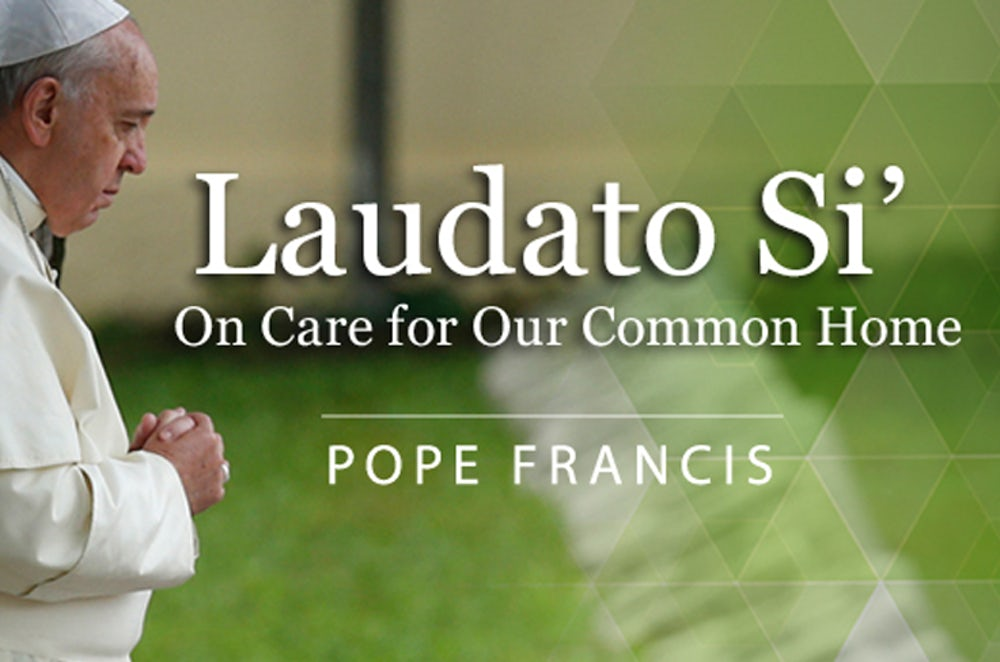
Saint Francis Xavier is a Laudato Si Parish inviting representatives from other parishes and congregations to join in the Laudato Si movement, and/or share initiatives in which they are engaged that address global warming. See: Who we are – Laudato Si’ Movement (laudatosimovement.org)
Presenters:
Dr. Lorna Gold, a member of the Laudato Si Board of Directors, and Board Members of FaithInvest – an international, not-for-profit network of religious groups and faith-based institutional investors, with particular attention to organizations in a healthy relationship to the environment. Network of values-driven, faith-consistent investors | www.faithinvest.org
Dr. Martin G. Palmer, co-founder and C.E.O, of FaithInvest, an outgrowth of Great Britain’s now-defunct Alliance of Religions and Conservation. Palmer is a theologian, Sinologist, author, and international specialist on all major faiths and religious traditions and cultures.
The Short Take:
85 % of the World’s Population is faith-based. Faith organizations are primed for Environmental Action.
2023: 1,000 Catholic organizations have adopted Laudato Si initiatives in their education work
Religious Organizations are the 5th Largest Group in the World – investing in Eco-Friendly businesses will make a tremendous impact.
Divesting in Fossil Fuel Companies is essential. However, selling off stock that others purchase continues to perpetuate the problem. Religious Leaders must work with Government Agencies to create Non-proliferation Treaties.
Invite your congregations to read and discuss “Points of Progress” series featured in the Christian Science Monitor which has an excellent record in Climate Change coverage
Title: Resilience and Resolve: A Climate Justice Training for New York City Faith Communities Sponsored by The Union Theological Seminary Center for Earth Ethics, NYC 10027 https://centerforearthethics.org/resilience-and-resolve/
Identify and significantly reduce Greenhouse Gases
A Good Model for Creating Human Industrial Contributions to Climate Change Initiatives: 1980’s World Response to Ozone Layer Deterioration – Pros & Cons
Jewish Call to Climate Action continues to raise climate extreme’s impact on refugees and on racial and ethnic justice issues. Jewish Call for Climate Action | Hazon
Topic 2: FAITH COMMUNITIES CAN MAKE SIGNIFICANT CONTRIBUTIONS
Presentations and Discussions among participants elicited the following:
Faith communities offer a significant Prophetic Voice to inspire social initiatives to combat global warming by emphasizing the Judaic-Christian outlook of hopeful, forward-looking, transformational world views for peace and collaboration, and citing similar goals in other faith traditions. Emphasize
The Values of Resilience, Fortitude.Courage in Calamity. What is now is definitely NOT what we can be.
The Bible and many faith traditions’ histories evidence a very Healthy Criticism of Power Structures. Thank you, prophets! Similarly, this generation must offer a public voice to the consequences of laws and procedures that prevent or inhibit local communities’ access to clean air and fresh water.
Humbly acknowledge and RECTIFY the results of the history of religious institutions becoming co-opted by power structures. Provide evidence of these events and offer prescriptions to remedy the patterns of this dubious alignment. Inspire your congregation to show visible signs of concern for Future Generations
Assure congregations that Conflicts are Opportunities, and these challenges are prophetic calls for change. Remember this: It often takes THREE repetitions in a public statement, homily, or sermon for people to remember it.
Address the psychological and social dynamics of fear and denial contributing to apathy, lack of compassion, isolation, and social collapse evident in faith traditions’ scriptures and religious history.
In Islam, adherents are reminded of what is called “The Providential Consequence of Corruption in the Land” as the impetus for the people’s return to righteousness.
Observant Muslims are required to donate 2.5% of their income to charity. Question: How does this compare to your congregations’ charitable giving? Can you promote a healthy spirit of competition? The time for Charity toward the Earth is now!
Concerns about Pollution factor need more attention:
PromoteINTERSECTIONALITY Inquire and learn from the people most impacted by events of natural and industrial disasters and experience the burdens of local, state, and federal legislation.
Undocumented workers, refugees, and marginalized neighborhoods are often ignored by health and safety regulators; they often suffer the most from working in the heat.
“No one left behind” is not today’s reality but it can be!
Create “Communities of Care”
Conduct town meetings for people to work through emotions associated with climate change denial or apathy, ideally facilitated by a psychologist. The goal is to help people relate their grief and disappointment and fears that their current life patterns and relationship to nature need to change.
Investigate and share everyone’s “Zone of Resilience.”
Follow up with Mental Wellness Techniques and offer sessions that affirm “we bear the stress together.” We need to “heal past the ‘Us’ that we are, and “collaborate forward” to a better future.
Emphasize that we already HAVE the Science and Technology to address the human contribution to Climate Change.
Highlight HUMILITY, JUSTICE, and STEWARDSHIP passages in faith traditions – all that contributes to “Our common humanity,” and “Reverence and care for Creation.”
EMULATE AND MODIFY AS NEEDED
Study other institutions’ ACTION PLANS and adapt them to your congregation’s and community’s needs.
Follow the example of the VATICAN’s recent disavowal of the Medieval “Doctrine of Discovery” and encourage conversation as to how contemporary institutions can reverse the curses of history.
Abandon all Colonial Imperialistic Responses to Crises.
Study and promote accurate history and report on positive movements in relation to indigenous peoples, e.g. the Taíno movement. “This movement challenges the prevalent belief that Native peoples became extinct shortly after European colonization in the Greater Antilles. It is spurring a regeneration of Indigenous identity within the racially mixed and culturally blended societies of Cuba, the Dominican Republic, and Puerto Rico, as well as other areas of the Caribbean.” Taíno: Native Heritage and Identity in the Caribbean | Taíno: herencia e identidad indígena en el Caribe | National Museum of the American Indian (si.edu)
Australia is currently an excellent prototype for Positive Climate Legislation (Input from Al Gore.)
DO SOME RESEARCH:
Research African, Methodist, and Episcopal Church (AME)’s Resolutions on GREEN THEOLOGY and Practice.
Elicit congregants’ participation in Earth-themed Music and Art Presentations
Study and emulate in consciousness and action Native and Indigenous peoples’ intimate relationship with Nature – past and present.
Research Available Local and Federal Government Grants for Institutions (including Religious Institutions) adopting GREEN INITIATIVES.
Topic 3: CLIMATE COMMUNICATION
Presenter: Al Gore
The goal is to move from perplexity to simplicity in language, visuals, and concepts, and to remain Positive and Hopeful about change for the better.
90% of Coal and Gas can be converted to solar and wind power readily.Solar Power is now the cheapest alternative worldwide.
HOPEFUL REALITY: World Temperature Rise can be halted within three years’ time and if policies and procedures change immediately to non-pollutant energy sources and industrial waste is prevented to reach a NET ZERO factor in human / industrial (including Automobile and transportation) contributions to climate change
To stay at Net Zero: 50% of Carbon Dioxide (CO2) will fall out of the atmosphere in as little as 20 to 30 years.
Religious Institutions are already primed to promote the message: “What we take, we give back.” Address the ways USA government historically has promoted the commodification of peoples and of nature – the dark side of “Discovery.”
Re-examine government policies such as the injustices of “The Jones Act” forcing people of Puerto Rico to import 85% of their foodstuffs whereas the island is capable of producing its own food.
o The Climate Reality Project Our mission is to catalyze a global solution to the climate crisis by making urgent action a necessity across every sector of society.
National Preparedness Report (fema.gov) See pages 8 through 10 for information directly related to Climate Change: FEMA Region 2 National Preparedness Division: Climate Adaptation for Houses of Worship NOTE: FEMA does not give “Disaster Designation” to Heat Waves at this time
Description: While much has been made of the intimate connection between inattention to place and the ecological crisis, very little attention has been given to the troublingly intimate relation between racial reasoning and the denial and destruction of place-centered identity. Dr. Willie James Jennings has been a pioneer in thinking through this neglected topic. Join Dr. Jennings in conversation with John J. Thatamanil, Director of Union’s Insight Project, as they take up this urgent topic.
Notes by Rev. James M. DiLuzio CSP (unless otherwise noted).
Venue: ISKCON Temple, Potomac, MD 20854
Dates: Friday and Saturday, April 14-15, 2023
Topic: “Spirituality, Interreligious Accompaniment, and Dialogue for Everyday Life” — from both theological and lived experiences perspectives
NOTES:
ON MERCY: The Movement toward “Complete Empathy” is a high value in both Hindu and Christian Traditions, acknowledging a The lineage of Mercy / Compassion.
“Discrimination, knowledge, non-delusion, forgiveness, truthfulness, control over the mind and senses, pleasure, pain, birth, death, fear, fearlessness.”
“One who does not hate any creature, who is friendly and compassionate, free from (the notion of) I” and my”, even-minded in pain and pleasure, forgiving and the yogi who is ever content, who has subdued the mind, whose resolve is firm, whose mind and intellect are engaged in dwelling upon Me such a devotee is dear to Me.”
“That one I love who is incapable of ill will and returns love for hatred. Living beyond the reach of I and mind, and of pain and pleasure, full of mercy, contented, self-controlled, with all his heart and all his mind given to Me with such a one I am in love.”
“Among the feminine nouns I am fame, prosperity, speech, memory, intellect, resolve, and forgiveness.”
“Therefore, since we are receiving a kingdom that cannot be shaken, let us be thankful, and so worship God acceptably with reverence and awe,” Hebrews 12: 28
“But you are a chosen people, a royal priesthood, a holy nation, God’s special possession, that you may declare the praises of him who called you out of darkness into his wonderful light.” 1 Peter 28
CHILDLIKE WONDER PARALLELS
Jesus’ teaching on childlike wonder in Luke 18: 15-16, Luke 20: 26; Mark 10: 13-15; Matthew 5: 9, 45, and Matthew 18:3 and the Nativity Luke 2
Participants created a 4-step List of the best ways to begin Interreligious Dialogue. Interlocuters must observe each step in the proper order:
Step 1: Contemplate Divinity.
Step 2: Contemplate My Relationship with Divinity.
Step 3: Meet with Religious Leaders from each respective Faith; Education is essential.
Step 4: Personal Connections are a NECESSITY: Meet with Peers in respective religions (Hindu doctors meet Christian doctors; Christian Neighbors meet Hindu neighbors; Teachers meet Teachers, etc.) i.e., begin with people with whom you have considerable commonality outside of your respective religion.
Vaishnava – Christian PARALLELS identified:
Vaishnava strives to achieve Union with Divinity, especially in yoga and meditation practices.
Christianity strives to experience“Christ in Me,” – an experience of Christ’s presence in mind, heart, spirit, and body, especially in communal gatherings for prayer, worship, Scripture engagement, and for many denominations, engagement in Sacraments.
Common Ground: Attendees concurred on the following concepts:
“God is active in and through all religions of goodwill and in all people.”
“God accompanies us all the time. We need to develop a constant awareness of that truth.”
The necessity of Ongoing Inward Transformation acknowledging three universal faith dynamics:
We Love God for our own sake, i.e., we are most often concerned for our own well-being and salvation as we understand it (We all begin with self-absorption).
We Love of God for God’s Own Sake – we recognize God is a Love greater than any individual can obtain. We gain transformation and enlightenment by standing in awe of God.
Love of oneself for the sake of God as we are all children of God. This is the path to self-acceptance and the assurance of human dignity and the great worth of all creation of which we are a part.
Achieving Mutuality is dialogue’s goal. Mutuality begins with an attitude of reverence toward “the other” that includes:
1. Recognizing the DIVINE may never be fully known in human terms.
2. Appreciation of diversity.
3. An agreement that all involved are SEEKERS – seeking Wisdom, Peace, Harmony, within and beyond one’s beliefs and traditions.
4. A commitment to Understanding one another,
5. An agreement to withhold all judgments and avoid occasions for debate.
6. A longing for articulating commonly held beliefs while respecting unique approaches to those common beliefs.
Mutuality requires RISK-TAKING. A willingness to be:
a. Vulnerable.
b. Honest.
c. Open.
d. Humble – a recognition that each person is a work- in-progress.
e. Engaged in Scrutiny of Self and of one’s tradition –
f. A True Love and Acceptance of SELF -unique, flawed, beautiful.
g. Cultivate KENOSIS (Late Greek kenōsis, from Greek, action of emptying) as applied to transcending ego to union with God and a liberating experience of interconnectedness of all peoples and all creation.
h. Infused with a Commitment to JUSTICE
Eastern Religions influence Western / European religions.
§Bandi Venkatramana is the district coordinator for Rashtriya Swayamsevak Sangh, a Hindu nationalist paramilitary organization and the ideological forebear of India’s ruling Bharatiya Janata Party. He said he wanted to send out a clear warning to non-Hindus entering this village: “There will be consequences!”
The Embodied Philosophy Movement About – Embodied Philosophy – Embodied PhilosophyThe Wisdom SchoolEmbodied PhilosophyThe Wisdom School includes over 1000 hours of in-depth courses, workshops and mini-trainings in contemplative studies, wisdom traditions, yoga philosophy, and mind-body integration for lifetime learners, seekers, yoga teachers, therapists & scholar-practitioners.
AN INVITATION: Christians interested in participating in next year’s Vaishnava – Christian Dialogue may contact me with a note including your denomination, degrees, multifaith organization(s) or involvement, and I will forward your information to Iskon. Blessings to all!
Host: Anuttama Dasa, Minister of Communications for the International Society for Krishna Consciousness (ISKCON), Websites: iskconnews.org and iskconenvironment.org
I finally got to watch “Are You There, God? It’s Me, Margaret? the film based on the best-selling Judy Blume mini-novel. I am glad I did. In its honest and humbling depiction of giggling girlhood angst (When will I develop breasts and begin menstruation? Does this make me fully a woman? Will I ever be kissed?), “Are You There, God?” offers an authentic sampling of a faith journey rooted in a secular context. No matter your age, faith, or cultural background, you’ll enjoy this slice of 1970 America, joining Margaret’s quest for friends, family, hope, and love at your local movie theater, or, if you prefer, on your streaming service to rent or purchase.
Here’s the set-up: Barbara and Herb Simon have reared twelve-year-old Margaret in an anti-religion household. Nevertheless, Margaret starts a natural, open, intimate conversation with God onscreen. She asks all the essential questions:
God, if you exist, who are you? Where are you?
Are you only in my mind?
What does a relationship with You mean?
Do I have to have a religion to keep this relationship going?”
I find it refreshing that the producers decided to translate Bloom’s book into film because “God inquiries” are perennial, engaging every human in various stages of life. And, as with all human endeavors, faith’s progression often engages us in familial, social, and emotional altercations. So, too, Margaret’s search comes into conflict with family members’ religious identities (or lack thereof) and contrasting beliefs. Viewers may wince when Margaret’s parents and grandparents – a paternal Jewish grandmother, and a maternal Christian couple – engage in an angry dispute over Margaret’s soul and identity. The scene offers a sad but realistic depiction of a major flaw in religiosity.
The conflict emerges with the sudden appearance of Barbara’s parents – a Christian couple in an unidentified denomination, who disowned their daughter for marrying a Jewish man. Eschewing their daughter’s wedding, they arrived after a fifteen-year absence indulging their fears that Margaret will not enter heaven if she is not baptized. A screaming match ensues when Herb’s mother Margaret insists that her granddaughter already embraces her Jewish heritage. Herb and Barbara disagree: “This is why we have no religion in this house!” In response to the uproar, Margaret storms out of the room and declares “I hate you all. I do not even believe in God!” The scene presents religious affiliation in the negative, and people of faith may feel despondent, but thankfully, the film does not end here. Evidence of a deeper response to faith, although succinct in its presentation, will be forthcoming in Act Three.
In terms of Movie-Making, the acting is fine throughout, especially the young Abby Ryder Fortson as Margaret, the ever-luminous Rachel McAdams as her mother, Barbara Simon, and Kathy Bates whose convictions, manipulations, and pizzaz as grandma Sylvia Simon are irresistible. What’s more, the young actors portraying Margaret’s 12-year-old friends come across as natural and engaging — perhaps Director and Screenwriter Kelly Fremon Craig’s finest achievement. But Craig works well with the entire ensemble. She sustains a breezy pace, and appropriately keeps the focus on Margaret and the kids, while not ignoring the formidable relationships Margaret has with her mom and grandmother Sylvia.
Overall, the script is solid and faithful to the book’s spirit, but Craig could have expanded the supporting roles to bring more subtext and weight to the proceedings. As is, Margaret’s dad played by Benny Safdie isn’t given much to do, and Barbara’s parents as written and portrayed couldn’t be blander! With no balance in the grandparent drama, feisty Jewish Grandma shines in contrast to the dull Christian relations making the contest of wills less effective than it should have been. Now, on to Act Three! Spoiler Alert!Now, on to Act Three! Spoiler Alert!
In the weeks that follow, Margaret navigates her troubled existence by using her hurt to become more sensitive to an ostracized classmate. What is more, she befriends the girl without her other girlfriends’ approval. Soon afterward, she propitiously enjoys some longed-for attention from the boy-next-store, and suddenly, in answer to her prayers, experiences her first menstruation. She has matured! With that, Margaret acknowledges she is loved and can offer love. Interestingly how that realization arrives when people implicitly accept the fact that the human body is “good.” Happily, ARE YOU THERE, GOD, IT’S ME, MARGARET concludes with our hero offering these words: “Thank you, God.”
This conclusion offers good theology, indeed. However we may understand God, whatever stories, doctrines, and commandments nurture our relationship with God and others, gratitude is at the heart of a healthy faith life — the unresolved, unreconcilable issues among grandparents (and others) notwithstanding. Self-acceptance, belonging, peace, and goodwill toward others is every faith’s goal – both as an empirical experience in the here and now, and, as in many faith traditions, a promise of fulfillment “beyond the grave.”
I trust that viewers will see that while ARE YOU THERE, God? IT’S ME MARGARET invites us to guard against the shadow of religion (i.e., “My faith empowers me to lord it over you, to make you more like me, to diminish your human dignity, deny our common humanity“), it encourages us to embrace the true aspirations of all major religions: Love as one for all, and all for one. In religious language: “The God in whom we live, and move, and have our being is Love Itself — Live in Love’s Embrace!”
Have you ever thought how good it would be if our public schools offered age-appropriated lessons on Religious Diversity to help students understand the religious dimension of American Plurality and cultivate mutual respect? Just this month, two members of New York City’s Council submitted a Referendum for that purpose. As a former high school English teacher, I had thought about a similar program for years. In case you, too, may wish to explore sponsoring a similar program in your community, I offer you the following.
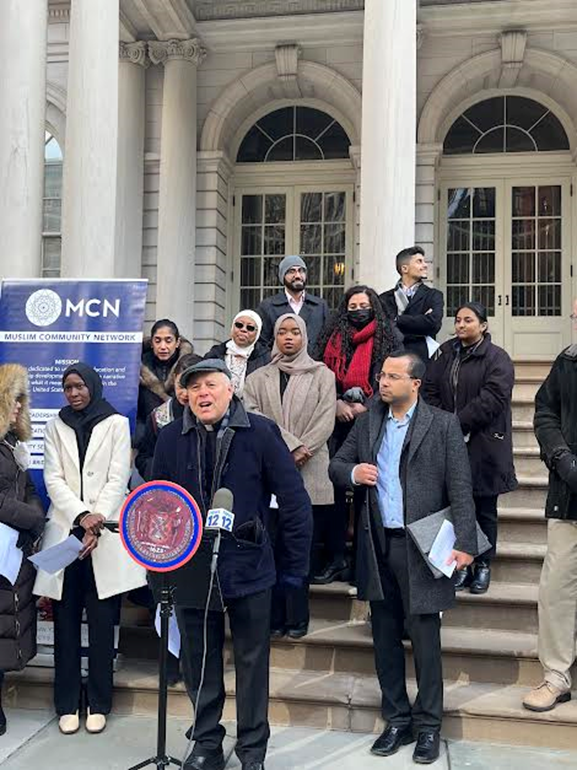
On Thursday, 2 February 2023, I took part in a coalition of members of many faiths to support two NYC Council representatives in proposing Religious Diversity Education in the New York Public School System. I made many new contacts, particularly among the Muslim, Sufi, and Sikh community, and hope to participate in future steps toward making this goal a reality. Many of us gave two- minute statements for a press release on the steps of City Hall, accompanied by Council Members Shahana Hanif (Main sponsor of the resolution) and Oswald Felix (Education Committee member). Here’s my statement followed by a couple of photos and links to learn more about this initiative:
“I am Fr. James DiLuzio, a member of the Paulist Fathers, a Roman Catholic order of priests committed to the open dialogue of Faith with American Culture. Today, in the “Land of the Free,” many people are afraid to display their religious symbols, to discuss their faiths, values, and ethics in public. Suspicion of people of faiths, especially practitioners of faiths present in minority populations in our country, contributes to misunderstandings and racial profiling that leads to bullying, intimidation, and violence that American democracy cannot allow. I join with the others here present to insist that the public Education of new generations of Americans provide ways to foster understanding and cooperation among peoples of different faiths, backgrounds and cultures. A positive future for these United States depends on it. We, and other representatives of religious institutions are here to assist New York’s Education System in creating a fair, open-minded, and respectful Religious Diversity Education.”
Do you live in New York City? If you are in favor of this resolution and would like to see it enacted, write or phone:
Council Member Rita Jacobs (Chair of Education Committee)
Note that this topic could give us an opportunity for another CONTROVERSIES IN CONVERSATION. Write to me at jamesdiluzio@gmail.com and we will start a new discussion.
On Thursday January 26, 2023, I attended Remembering: Talking About the Holocaust in the 21st Century, a panel discussion co-sponsored by Fordham University and the Under-Told Stories Project of the University of St. Thomas in Minnesota, in partnership with the Museum of Jewish Heritage in New York. It was moderated by Fred de Sam Lazaro, director of the Under-Told Stories Project at the University of St. Thomas in Minnesota, a program that combines international journalism and teaching. He has served with the PBS NewsHour since 1985 and is a regular contributor and substitute anchor for PBS’ Religion and Ethics Newsweekly. Fred de Sam Lazaro | Author | PBS NewsHour
HERE ARE MY TAKE-AWAYS: are my take-aways with links for more information about each of the participants:
FOUR KEY Suggestions (with references) on How to discuss the Holocaust in conversations and in classes and seminars:
Keep the stories of the HEROES among Jews and Jewish sympathizers, the “Righteous Ones,” in tandem with the facts of the Holocaust catastrophe, Nazi ideology, and humanity’s inhumanity. This imperative was presented by:
Professor Eva Paddock, Educator and Holocaust survivor, shared some of her personal story as one rescued from Czechoslovakia on the eve of World War II.
At age 2, Eva was one among close to 700 youth whose parents authorized their emigration to England via train and ship to live safely in foster homes. Now known as “Winton’s Children,” the heart-rending evacuation of mainly Czech and Slovak children for safety was organized by Sir Nicholas Winton, a 29-year-old British Stockbroker between March and September 1939, in the
months leading up to the outbreak of World War II. Winton’s parents were of German Jewish descent, and his deep foreboding regarding Nazi’s approaching Czechoslovakia, inspired him to organize eight trains for the Jewish children’s transportation out of the country.
In the interview, Professor Paddock also shared the extraordinary events that led to her father’s subsequent escape from Nazi occupied Czechoslovakia –including the fact that he was actually assisted by a sympathetic SS Officer!
Peter Osnos, journalist, is an American journalist who is the founder of PublicAffairs Books.[1]Mr. Osnos shared information about his UNTOLD STORES PROJECT Under-Told Stories Project (undertoldstories.org) highlighting the Winton project as illustrated in a recent book by Internationally renowned illustrator Peter Sis.
2.Yes, it is helpful to offer comparisons and distinctions of Holocaust history with other historical genocides, wars, and political travesties – Armenian Genocide in Turkey, Massacre of Albanians in the Balkan Wars, Rwanda, Stalin, etc. – while insisting on the unprecedented, unique facts of the Nazi “FINAL Solution.” This emphasis articulated strongly by:
Magda Teter, Shvidler Chair in Judaic Studies, Fordham University emphasized this point. She also spoke about her current project: Integrating Jewish History in General History
3. It remains essential to include the Contexts of European Antisemitism in discussions and presentations of the Holocaust. Furthermore, include details on the origins of, and specifics of, Nazi ideology, the horror of eugenics, with concrete historical evidence of the prophetic signs of impending Nazi ascent. The panel was unanimous emphasizing these points, emphasized strongly by:
Professor James Loeffler, Jay Berkowitz Professor of Jewish History, University of Virginia
4. Regarding Antisemitism in America Today: The Charlottesville Riots of August 11, 2017, brought the contemporary eruption of Anti-Semitism into focus for the American public. As always, encourage critical thinking imbued with religious and social ethics. Note that in Charlottesville, the behavior was not Holocaust denial, but rather, a resurrection Nazi ideology and symbols –including its propaganda methods were revoltingly on display. Note the rioters’ holding torches on August 11, 2017 – a deliberate imitation of Wagnerian opera and Nazi propaganda art direction:
Judy Woodruff, Anchor PBS NewsHour, who spoke of urgency in addressing the divisiveness and hate in the USA and elsewhere, with a special attention to the rise in Antisemitism.
I recommend the film WOMEN TALKING. More than a “movie,” it is a fine example of honest discourse on both intellectual and emotional levels to the many impulses operating in our responses to violence. Set in a contemporary Mennonite community, the characters engage in Christian concepts, but the issues are equally applicable to people of all faith traditions –to anyone who holds forgiveness and reconciliation a life-giving value.
Equally important, the dialogue and images elicit questions on how families, and social and religious institutions (especially patriarchal ones) educate boys in relation to girls. I think the film will prove a great resource for any discussion, class, or seminar on Forgiveness, as we continue to ask ourselves, “With faith’s compulsion to forgive, what choices do we have until, or if, we are ever ready?” and “How does forgiveness engage us in issues of accountability?”
As a response to the violence our nation is experiencing here and now, WOMEN TALKING is definitely worth your time.















 frjamesdiluzio