
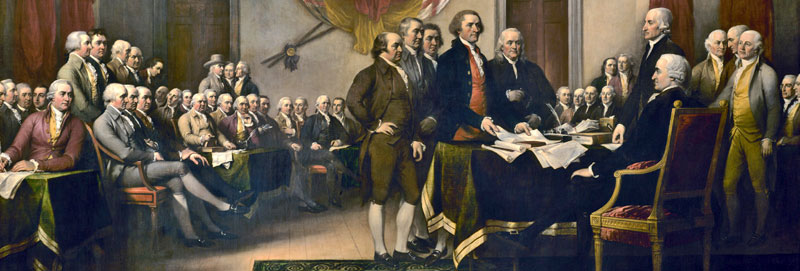
As we celebrate the birth of our Nation, it is humbling to remind ourselves how at the Continental Congress, the founders came so very close to creating independent states or small confederations of like-minded states—in part because all the states did not want to participate in paying off the debts of the Revolutionary War. Four distinctive dynamics were at play to create a formidable union as per Jospeh J. Ellis’ book FOUNDING BROTHERS. Today, assessing the qualifications of people running for government positions benefits us all. To help us keep integrity in our democracy, I am offering my interpretation and application of Ellis’ four points (found in pp. 17 and 18 of the book). We need to expect the same qualifications from our representatives today. I invite you to join me in further conversation by reading this entry and offering your comments.
1. The founders comprised people highly educated in philosophy (and corresponding ethics) as well as law. The variety of perspectives made for a healthy congress while, at the same time, universal ethics such as the common good did not acquiesce to esoteric individual priorities.
2. The founders knew each other intimately through shared meals and social occasions. Such familiarity enabled them to trust one another, grounding them in their common humanity. They showed respect for one another irrespective of their opposing ideologies. Today, the tenets all major world religions ground us in our “Common Humanity” – providing necessary voices to fix what is lacking in statements or policies emanating from the three branches of our federal government. The lesson: all sectors of society must engage in local and national dialogues.
3. The founders had the ability to compromise while allowing for significant changes for the future. They knew when to put the most controversial issues aside for the sake of the union. This emphasis on communion in a context of great diversity is an important value, yet a mixed blessing. It was tragic that they postponed the slavery issue on innumerable levels beginning with its disavowal of the full dignity of every human person. Mindful that we allowed the nation’s economy to grow on the backs of slaves for over 70 years, we have in evidence a firm example of the failures of prioritizing economics over ethics. Equally important to remember, however, is that prior to the Civil War, no congressional discussion on ethics of slavery ensued. That issue erupted from the people themselves in protest against congressional neglect. The voice of the people contributed then–and forever will remain–an essential component of health and vitality in our American experiment and its ethics.
4. The founders grounded their deliberations and their subsequent resolutions on their impact on future generations, with an eye on both short-term and long-term consequences. We, the people, must demand that our elected officials and the judicial branches of government honor this meritorious tradition.
Here’s a link to Jospeh Eliis’ book:
https://www.barnesandnoble.com/w/founding-brothers-joseph-j-ellis/1103022936?ean=9780375705243

