THE STORY OF THE ADVENT WREATH + How to Make Your Own

To share with family and friends. Adapted by Father James DiLuzio CSP from the book WINTER –Celebrating the Season in a Christian Home Liturgy Training Publications, ã1996 Archdiocese of Chicago

The story of the Advent Wreath began long, long ago. In a time before the invention of electricity; in a time before people had cars. In those days, in the lands of northern Europe, most families travelled in horse drawn carts or carriages on mostly dirt roads. 

As winter’s chill covered the earth, the roads were often rutted with ice and frozen mud. The wooden wheels on people’s carts would slide on the ice or get stuck in wet and icy muck. People had to stay at home. With no opportunity for extended travel, people seized the time they had to care for their wagon wheels. Wagon wheels usually dried and cracked from changing weather throughout the year, so families brought the wheels inside their houses to treat them with oils. Once the wheels were well-greased, where do you think families would have stored them? They tied cords of heavy rope through the spokes and hung their wheels from their ceilings!

Once the Church declared a Season of Advent – a time of prayer and preparation for the celebration of Jesus’ Birth, Christians looked for a way to mark the days leading up to Christmas in their homes. On the first of four Sundays before the Nativity,  families lowered one of their wagon wheels from the ceiling to suspend it–at just the right height for fathers and mothers, sisters, and brothers, to decorate it with evergreen branches and pinecones. In addition, they nestled four large candles in the greens along the wheel rims—one candle for each week of Advent. The four candles were made to match the Church colors in the vestments that the priests wore (and still wear)—the same colors as the altar cloths decorating the parish altars. The first two weeks offer purple as a sign of penance and renewal, the third week pink, and the fourth returns to purple. Why pink on week three? Because we are getting closer to the day Jesus the Christ, “The Christmas Rose” bloomed on earth for humanity to grow in faith, hope, and love. We mustn’t lose hope!

Today, Christian people everywhere continue the tradition of the Advent Wreath. Perhaps you and your family have one. If not, you can make one at home. You can use fresh evergreens and real wax candles, or electric candles, or make your own evergreens with green tissue paper on branches of thin, brown, cardboard paper. For candles, roll up sections of purple and pink cardboard thick enough to stand tall on their own, and top them with bright, yellow paper flames!

On the first Sunday of Advent, light one purple candle and continue to light it on each night that follows. As you gather around the wreath to pray, sing an Advent song to remind you that God became a human being just like us, so we never have to feel alone. On the Second Sunday of Advent, light both the first and a second candle and do this for each night of prayer until the Third Sunday when we light two purple and now a pink candle for each night of the third week of Advent. On Fourth Sunday and every day that follows, including Christmas Eve, light all four candles and sing your first Christmas Carol of the

Season. As you sing, light one white or golden candle and place it in the center of the Advent wreath to celebrate Christ with Us as the Light of the World.

Prayer to Bless the Advent Wreath

God of goodness, 
Bless our Advent wreath.
May its circle remind us of your infinite love 
and inspire us to live as one human family.
May its evergreen branches be a sign of hope 
that calls us to share with people who need it most.
May its candles illuminate peace in our hearts
and guide our hands to touch the world with compassion.
May we receive the joy of your word 
and bring it to life in all corners of the earth. 
We ask this through Christ our Lord. Amen.

How to Make Your Own Advent Wreath out of Cardboard or Construction and Tissue Paper

To make your own Advent Wreath, you will need

  • Green Tissue paper cut in strips to tie around a wire coat hanger to form a wreath.
  • Three pages of purple cardboard or construction paper;
  • One pink cardboard or construction paper page.
  • One white cardboard or construction paper.
  • One each yellow and orange cardboard or colored construction paper.
  •  Adhesive tape.
  1. Roll, tape, and stand the purple and pink papers as “candles” and place them equally spaced along the outside of your wreath.
  2. Roll and tape the white page as your Christmas Candle and place it in the center of the wreath.
  3. Add more green tissue paper “leaves’ at the bottom of each candle.
  4. Cut out flame shapes from the yellow paper to be taped to form a three-dimensional flame large enough to be taped to the top of each candle. Add the smaller orange flame shape to tape to the center of each yellow flame.
  5. Tape one three-dimensional Yellow-Orange flame on one purple “candle” on the First Sunday of Advent.
  6. Add a flame to a second purple candle on the Second Sunday of Advent; a flame on a pink candle for the Third Sunday of Advent, and a flame on the fourth purple cancel on the Fourth Sunday.
  7. Add a flame to the white Christ candle on Christmas morning.
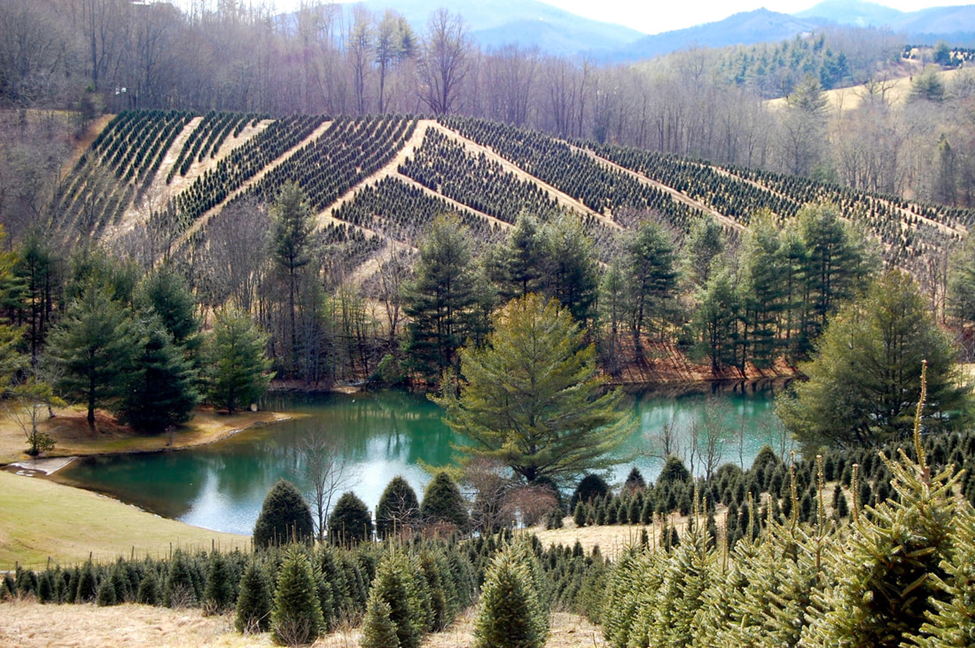
GOOD NEWS: Christmas Tree Cultivation and Replacement in the USA

Blessings to All as Advent comes to a close and we cultivate, once again, a deeper, more intimate relationship with the Incarnation, marveling at the vulnerability, humility, and honesty of Jesus, whose light illumines hearts ever-ready to be guided by His Holy Spirit.

Here is an Inspiring Overview of Christmas Tree Cultivation and Replacement lovingly tendered by devoted Tree farmers in the USA.  The following text comes from a new AI program called Microsoft CoPilot:

Growing, cultivating, and replacing Christmas trees in the United States is quite a fascinating process. Here’s a quick overview:

Growing and Cultivating

  1. Choosing the Location: Christmas tree farms are usually located on sloping hillsides where the soil drains well. The trees need ample sunlight and room to grow.
  2. Selecting the Species: Different species are planted depending on the region and climate. Popular species include Douglas Fir, Fraser Fir, and Scotch Pine.
  3. Planting: Seedlings are typically planted in rows during early spring. Farmers often plant them densely at first, thinning them out as they grow to ensure each tree has enough space.
  4. Maintenance: Growing Christmas trees takes time and care. Farmers spend 7-10 years tending to them, which includes:
  5. Pruning: Trees are sheared annually to develop a desirable conical shape.
  6. Weeding: Keeping the area around the trees free of weeds to reduce competition for nutrients and water.
  7. Pest and Disease Control: Regular monitoring and treatment to protect against pests and diseases.
  8. Harvesting: When trees reach the desired height (usually 6-8 feet), they are cut down and sent to market. This typically happens from late November through December.

Replacing and Sustainability

  1. Replanting: For every tree harvested, another is planted to ensure a continuous supply. Some farmers plant multiple seedlings in anticipation of natural losses.
  2. Environmental Benefits: Christmas tree farms are beneficial for the environment. They provide habitat for wildlife, help prevent soil erosion, and contribute to air quality by absorbing carbon dioxide and releasing oxygen.
  3. Recycling: After the holiday season, many communities offer tree recycling programs. These trees are often turned into mulch, which can be used in landscaping and gardening.

Growing Christmas trees is a labor of love that requires patience and dedication, but it’s also a sustainable and environmentally friendly practice. If you’re ever in the mood to visit a Christmas tree farm, it’s a great way to get into the holiday spirit and learn more about the process firsthand!

And here is a link to one of my favorite Christmas Songs. My favorite line: “And the shepherds could not tell whether Angels or the Stars themselves were singing.” The song is called CHRISMTAS 1913. Singer John Denver, a prophetic environmentalist, recorded it on his album JOHN DENVER AND THE MUPPETS CHRISTMAS TOGETHER.  Here’s a link:

John Denver & The Muppets- Noel: Christmas Eve, 1913

TOGETHER IN HOPE Winter Issue 2023

Compiled by Fr. James DiLuzio CSP

As we anticipate the oncoming of WINTER in the Northern Hemisphere (I believe all our subscribers are in the Northern Hemisphere) and continue to celebrate Hanukkah, Advent, and prepare for Christmas, and Kwanzaa, I invite us to acknowledge upcoming festivals beyond our more commonly known ones. (Kwanzaa begins 16 December 2023 through 1 January 2024.) More on Kwanzaa? See: https://www.britannica.com/topic/Kwanzaa), Before you do, I invite the Christians among us to explore my blog entry: Suggestions for a CHRIST-CENTERED CHRISTMAS (Revised & Updated) But now, here’s this:

The Winter Solstice

21 December 2023  Winter Solstice. (Pagan origins but commemorated in a variety of ways by almost every religious tradition) Actually, scientists designate it as an official “moment” on a particular day and not a “day” at all. What is constant: the Northern Hemisphere’s Winter Solstice usually takes place between December 20 and 23, depending on the year. In the Northern Hemisphere, the 2023 winter solstice will occur on December 21, 10:28 p.m. EST. In the Southern Hemisphere, it will occur on June 21 at 14:58 GMT which is 10:58 a.m. EDT. Source # 1: https://starwalk.space/en/news/what-is-a-solstice

Source # 2: https://www.timeanddate.com/calendar/winter-solstice.html

Source # 3: WINTER SOLSTICE 2023 around the WORLD: https://www.rd.com/list/winter-solstice-traditions/

YULE

22 December 2023: YULE: What we used to designate as “Pagan” religions, are finding a growing number of adherents today. Along with many others, the contemporary Wicca movement celebrates YULE, marking the New Year in the Anglo-Saxon and northern traditions of Wicca. It honors the birth of the god called the “Winter Born King.” It is described as a time for ritually shedding the impurities of the past year, and for contemplating avenues of spiritual development in the year ahead. Source: Multifaith Calendar 2023 published by The Multifaith Action Society https://multifaithaction.jimdo.com/ More on “Paganism” begins with a good definition https://www.merriam-webster.com/dictionary/paganism and this website among many others: https://www.learnreligions.com/overview-of-modern-paganism-2561680

BUDDHIST WINTER COMMEMORATION

December 26: Sanghamitta Day–the Anniversary of the arrival of Sanghamitta, daughter of King Asoka, who started the Order of Nuns in Sri Lanka and brought a branch of the Bodhi Tree (which still survives in the ancient capital of Anuradhapura). It occurs on /near the Full Moon day of December

Source: Multifaith Calendar 2023 published by The Multifaith Action Society https://multifaithaction.jimdo.com/ More on this at https://en.wikipedia.org/wiki/Bodhi_Tree and, for your convenience: https://www.britannica.com/topic/Buddhism

BOXING DAY

December 26: BOXING DAY Does anyone actually remember any of the possible explanations for this observance in the UK, Canada, Australia, and New Zealand? Hint: it has nothing to do with a sport requiring gloves that takes place in a designated space encircled by a rope. https://www.britannica.com/topic/Boxing-Day

*********************************************************************************************************

PRAY FOR PEACE

As we continue to grieve the Russian-Ukranian War, the Israeli-Hamas War, and the pervasive violence evident throughout the world, I offer you this plaintive song by Judy Collins written in 1994 during the Yugoslav War 1991-2001 in the Balkans. Entitled Song for Sarajevo (I Dream of Peace), it conveys the kind of heartbreak all war should invoke along with a prayer of hope. Listening to it keeps me sensitive to human suffering in all of its forms and contexts. It engages me in prayer. Let me know what you find helpful as conduits to prayer in the comment section below.

*********************************************************************************************************

A PRAYER FOR PEACE (from Catholic Relief Service)

Lord, Father of our human family,

You created all human beings equal in dignity:

pour forth into our hearts a fraternal spirit

and inspire in us a dream of renewed encounter,

dialogue, justice, and peace.

Move us to create healthier societies,

          and a more dignified world,

          a world without hunger, poverty, violence, and war.

May our hearts be open

          to all the peoples and nations of the earth,

May we recognize the goodness and beauty

          that you have sown in each of us,

          and thus, forge bonds of unity,

          common projects, and shared dreams.

https://www.crs.org/

PLEASE ADD in the comments YOUR FAVORITE CHARITY so we may have an abundance of Multi-faith agencies at our fingertips. Perhaps, in the future, we could pledge to a friend’s agency to honor another faith or denomination’s life-giving efforts.

MORE ON WAR AND PEACE

FREE DOWNLOAD: HOW TO TALK TO JUST ABOUT ANYONE ABOUT ISRAEL PALESTINE: https://www.mybrotherfromanothermother.org/download-guide/

I became aware of this resource through an online event sponsored by https://www.sharingsacredspaces.org/ — a website we all need to “Bookmark” for the many seminars, programs, and educational tools it offers for Interfaith dialogue. The program was entitled “The Israeli-Palestinian Situation: Skills for Conflict Transformation” offered by long-time peace activist Dr. Yehezkel Landau whose website offers a multitude of resources. https://landau-interfaith.com/ AND https://www.mybrotherfromanothermother.org/

SOURCES FOR ONGOING EDUCATION – Engaging in Controversies in Conversation:

HOW DID WE GET HERE? I want to offer you a Terrific Presentation on the Modern History of the Conflict Between the Jews and Palestinian Peoples PART ONE. I attended this workshop offered by Fordham University’s Center for Jewish Studies in New York City “LIVE.” I was in awe of the way these two revered professors artfully condensed and contextualized the essential roots of the trials and suffering of two peoples that began in the 19th century. I think you will find this presentation helpful in distancing us, if only a bit, from the strong emotions the current war invokes in all who want to talk about it. I am confident we all agree that more education will help.

You may contribute to the many efforts of Fordham’s Center for Jewish Studies here: https://www.fordham.edu/academics/departments/jewish-studies/

Here are some more extraordinary websites to add to the conversation:

https://thirdnarrative.org/narratives/

BOOK CLUB 2024

I continue to ask for input on these choices for next year. WHAT IS GOD? by John Haught. The author suggests five ways of thinking realistically about God by reflecting on profound human depth experiences of the Future (aka ‘Horizon’), Freedom, Beauty, and Truth.  Dates: I will offer morning and evening sessions the WEEK OF FEBRUARY 4 through 9th. Times to be designated after all confirm their interest. Please Respond by Monday, January 15th with your available dates and preferred time frame Morning or Evening.

Available at https://www.paulistpress.com/Products/2754-7/what-is-god.aspx

In JUNE 2024, I propose we try WHAT IS RELIGION? by the same author. In this book, John Haught invites us “to uncover what it is that religions have in common: the archetypal human need to find meaningful routes through life, and to stay in touch with their spiritual potential.”

Available at 

https://www.paulistpress.com/Products/3117-X/what-is-religion.aspx

More about John Haught here: https://www.wikiwand.com/en/John_F._Haught