Mass of Creation Homily from Fr. James DiLuzio 

The First Reading: Isaiah 35: 1-8

The Second Reading: The Letter of James 2: 5-10; 12-13   

Gospel of Mark 7:31-37

Hold that image: Jesus restoring a man’s hearing, offering him a new beginning – a new life using spittle – his own saliva.  That is an earthly vision if there ever was one. Evidently, God’s spirit is active  through the very elements that constitute a human being, and all that Nature comprises. Earthy thought, indeed! Earthiness is part of the mindset we must cultivate. Remember Genesis “then the Lord God formed the man out of the dust of the ground and blew into his nostrils the breath of life, and the man became a living being.”  Add a little spittle, a little essence of  Jesus, and we can be born again.  Hear better. See better. Act better. 

Laudato Si insists reminds us of our bodies and insists that our lives are not  “just about us.” Human beings and Nature are interdependent. Remember: we are not the only species to have come from the ground. It is written: “Out of the ground the Lord God made grow every tree” and “out of the ground all the wild animals and all the birds of the air.”  That is our deep truth.  And truth evokes responsibility, remembering that God placed Adam and Eve on the earth: “to cultivate and care for it.”  

We have heard these words at the beginning of our lives–from childhood for most of us. And we have heard them many times since– yes!  But in these perilous times, we have come up short! We find ourselves lacking in creative cultivation of what surrounds us; failing to prioritize the interconnectedness “of all things now living.”  Many of us are suffer from inertia.  After all, what can we do?  The answer should be quite clear: Return to the Paschal Mystery!  It is TIME  for a stronger identification with Christ, the earthbound Incarnation of the Word. 

Ah, but the eternal pattern of Dying and Rising is growing out of favor these days. We like the rising, we don’t like the dying.  Yet did not Our Lord say, “Unless a grain of wheat falls to the ground and dies, it remains just a grain of wheat; but if it dies, it produces much fruit?” What prevents us from surrendering to death, to change, to rejuvenation and renewal? The Letter of James warns us against Favoritism – a frequent source of inertia. Indeed, our society encourages us to favor ourselves over others. 

Western culture insists we participate in its vision of progress – and who doesn’t like progress? But this progress is based on an economy that advances some at the expense of others. Parts of the world, even people in our own country, go without, or go with less, so we may have more. The earth’s resources are depleted, and animals suffer through it all.  Thus, WE SIN, as Scriptures says, “you are convicted by the law as lawbreakers.”   It is the Law of the Gospel that convicts us. Not the laws of our culture, for these days our society appears to foster hedonism along with progress.  

But take heart! Strength lies in numbers, friends, and from the number of people here, and the people and parishes we represent, there is hope that our collaboration will turn the tide of earth’s Calamity.  How? Through repentance, through prayer, solidarity, and true Worship. Thank God we came to Mass tonight!  We need God’s help, and with God’s help we shall overcome.

 The task before us is daunting — nothing less than turning our society inside out! But “inside out” is the Gospel, is it not?  “The Great Reversal” lifted up the lowly, empowering the deaf to hear contemporary prophets, awakening the weary and downhearted, revitalizing the faithful so that every animal, vegetable, and mineral our land, for our future will flourish. Hear it! See it! Live it! 

Tonight, we ask Jesus to strengthen us, to remind us that as we consume His Very Essence in this Eucharist, the Incarnation of the Holy extends through us. Connecting our bodies to His –from the ground up! Now is the time to enflesh Isaiah’s words anew all in our  Imitation of Christ, to ‘strengthen hands that are feeble, make firm the knees that are weak.” Even knowing that at times those hands and knees may be our own. 

  1. This homily emphasized that, like all plants and animals, God designed humanity to come from the earth. Do you feel comfortable or uncomfortable with this image? Why or Why not?
  2. What are your thoughts about the “Great Reversal” of our society and culture to create a more
    inclusive world-view with other peoples and with Nature? What might need to be “reversed?”
    What may need to be retained?
  3. How do you navigate the reality of change and proposals for change? Share fears, anxieties,
    hopes, and dreams.

24TH SUNDAY OF ORDINARY TIME 2024 Homily by James DiLuzio CSP

Readings may be found at https://bible.usccb.org/bible/readings/091524.cfm:

Who are the people who “light up our life?”  They are the people we are always happy to see – no matter the occasion, no matter what state they find us in -happy, sad, distracted, whatever. They are the people who bring us comfort, joy, hope, and those whom we readily, freely affirm, and who, in turn, affirm us. These are the people who engage us in LIFE – its joys and sorrows, goals and dreams and disappointments. These are the people who are REAL. 

In his book ON THE THRESHOLD OF HOPE, Pope Saint John Paul II wrote that “the search for God and the search for ‘self’ is one and the same search.”  So, to answer the question who Jesus is, we do well to begin with ourselves. 

Who first introduced us to “the Light?”  Who brought us to life? Might as well start with our parents – everyone has them, even if they were not the ones to nurture us after birth.  But today I am thinking of a most nurturing mother and father, or any caretaker caressing an infant, engaging in a baby’s smiles, the coos.  There is not just joy here, but anxieties, too, but not without hope that all will be well, and that this new life will prosper. In all of this, faith offers comfort in this wonderful quote from the prophet Jeremiah 29:11 on behalf of God: “For I know well the plans I have in mind for you—oracle of the Lord—plans for your welfare and not for woe, so as to give you a future of hope.” 

Keep that quote in mind as we follow our parents or guardians sending us off to school for the first time—feelings of excitement, yes, but also fear, and sadness mixed with longing, acknowledging the passage of time, the deep realities of change. That’s what they felt, and likely, that’s what we felt, too. 

Life engages us time and time again and again in all the human realties of thought, and feeling.  Our first days of school (thinking of the highs and lows starting Kindergarten!) and later, when we were off to junior high, high school, college. Did he get any easier? One experience building upon another- sometimes “yes,” sometimes “no.”  And then, for all the love we may have experienced from those who Light Up Our Life, still, the securities and the insecurities we encounter completing job applications, dating, announcing our engagements or entrance into the priesthood. Love we experience from others could have, can still, if we let us,  root us in a deep acceptance of life’s realities, of who we are, who we are not, of successes and failures along the way, of, yes, in religious language, the realities of sin and grace. Faith addresses these realities by acknowledging the Crosses we bear, while knowing that all things will pass. Sorrows can and will be turned to—well, if not always JOY, at least to WISDOM, to greater faith, hope, and, above all, love. 

In the powerful Genesis story Adam proclaims one of the great comforts in the Creation, speaking of  Eve “This one, at last, is bone of my bones and flesh of my flesh; This one shall be called ‘woman,’ for out of man this one has been taken.” This is part of our comfort and hope. Essentially, we are never alone. We are destined for relationship with God and others.  Our Trinitarian Faith affirms God is the essence of Being, i.e., God is Relationship itself, and relationship is the Life God calls us to embrace.  This is very important in our response to who Jesus is. 

The Church reminds us continually that Jesus is bone of our bones, flesh or our flesh, making Him the light of our lives, indeed, the light of the world.  He engaged in the joys of life and its pain, enduring the Passion, the Cross. The Resurrected Jesus refers to himself in a similar way when He says  to the disciples: “Look at my hands and my feet, that it is I Myself. Touch me and see, because a ghost does not have flesh and bones as you can see, I have.”  Thus, we must examen our relationship with HIM and others because we are extensions of Jesus’ very flesh and bones. 

THE CREED SAYS: “and (He)  became man.”  All was created WITH HIM, THROUGH HIM, AND IN HIM to culminate in His person, in a particular historical, biblical time and place. Jesus comprises all aspects of creation -material, emotional, spiritual, and more because of God’s intentionality, that all came before Him and is retained by Him for Him to be part of this world. However, Jesus’ life on earth was not an end in and of itself,  but life with a purpose, to engage in the pattern of dying and rising to inaugurate a transition to something yet to be fulfilled, as the Bible says, into “a new heaven, a new earth,” including a newly defined, ever-perfecting humanity for all. For the Creed states “He rose again on the third day in accordance with the Scriptures.”: 

Here we have the vision on our horizon. In these lines we find both a literal and spiritual acceptance of the value of LIFE, physical, human life, in both joys and sorrows, engaging in the thoughts and feelings of parents, single people, babies, children, adolescents, young adults, mature individuals in every stage reminding us to accept the pattern of Jesus which is the pattern of Creation and everything – life, death, rising, renewal, change, dying and rising.  This is LIFE in its fullness, LIGHT for our lives, and the depth meaning of love because, as we acclaim in the Creed: and his kingdom will have no end.                    

JESUS is the Godman, who is NOT JUST AN IDEA, CONCEPT, A TEACHING, BUT INCARNATE FLESH, transformed yet all too REAL. This is  why the church insists on perpetuating eucharist.  This is why we come to the table and worship and be thankful, unafraid of the fullness of life, joys, sorrows, all of it.     Again, I repeat that thought I began with from Pope Saint John Paul II wrote “the search for God and the search for ‘self’ is one and the same search.”  So here is our answer to Jesus: 

Who do we say Jesus is today?  “Jesus, you are who we are:  We are You, and You are Us. We are bone of your bones, flesh of your flesh, ready to die and rise, picking up our crosses not in despair but in hope and perseverance because that is what LIFE is, both LIGHT and Darkness. For where there is Great LIGHT, there is also Shadow, yet all of it, yes all of it is sustained by LOVE.  And that is LIFE in its fullness. So, what can we say to Jesus when he asks, “Who do you say that I am?”  Jesus, this is our answer, our answer is this: JESUS you are bone of our bone, flesh of our flesh.  Jesus, you are LOVE. 

PLANT BASED RECIPES – FOR EARTH’S SAKE ISSUE # 2

GIVE PLANT-BASED RECIPES A TRY

Submitted by members of Saint Paul the Apostle Parish NYC Laudato Si Team

Saving The Planet The Plant-Based Way 

One of the best ways we can help the planet on an individual basis is by adopting a plant-based lifestyle.  Eating plant-based reduces one of the most harmful greenhouse gases polluting our environment: methane.  In fact, methane is 28 times stronger than carbon dioxide emissions (pollution from cars, factories, coal, etc.). That means that when you choose to eat a plant-based diet, you are doing more to help our ailing planet than any other choice you could make as an ethical consumer.  

Not ready to make the plunge to plant-based completely?  No problem. Try substituting several meals a week that you would normally eat meat for something plant-based. Or take part in the National movement “Meatless Mondays” where you join the millions of people who choose to eat plant-based every Monday. Below are two recipes to inspire your journey – one that is budget-friendly and one for the foodies!  We hope you enjoy it. 

Budget Black Bean Tacos 

Ingredients

1 Tbsp Cooking Oil

1/2 Small yellow onion, diced

1 – 15oz can Black beans 

1 c Shredded Cabbage/Lettuce 

Canned Salsa 

Taco Shells – hard or soft

Taco seasoning Packet 

Lime

Serves 4.

– Strain and mash the beans slightly, leaving some beans whole. Add 1 tbsp of oil to a pan over medium heat, add 1/2 a chopped yellow onion, cook until softened, clear. Stir in the beans and heat through. Add a taco seasoning slowly and taste to get the level of spice & heat wanted. Do the same with the salsa. Add water if the bean mixture is too dense.

– Shred about a cup of cabbage or lettuce to add to the tacos for crunch (optional). Toss with oil and a squeeze of lime and salt to taste. 

If using soft shell tacos feel free to warm and slightly brown them in an oiled frying pan  prior to assembling the tacos. You’re ready to assemble. If you have leftovers the bean mixture can be reheated. 

*The recipe can also easily be assembled as a bowl instead of tacos by starting with a base of rice.

Truffle Glazed  Potato and Tofu Tacos 

1/3 to 1/2 package tofu (firm or extra firm) 

1  – 2 Tbsp Olive Oil (or any cooking oil you have on hand)  

1 cup Frozen Hash Browns, any variety

1/2 Tbsp  Corn Starch 

1/2 cup Spanish onion

1 Tbsp Yeast Flakes 

salt, pepper, garlic Powder to taste 

1/2 cup Plant-Based Gouda Cheese

1 fresh jalapeno (or pickled jar jalapenos if you prefer)

4 corn tortillas

For The Glaze 

1 1/2 Tbsp Truffle Glaze 

(or make your own by combining balsamic glaze and truffle oil) 

Arugula

To Prepare Tofu: 

Open and drain the tofu package.  Place tofu in a tofu press for 30 minutes. Alternatively, squeeze as much water from the tofu as possible with cheesecloth, then place drained tofu on a plate with a very heavy pot on top of it for 1 hour or more to remove as much of the liquid as possible. Gently squeeze and drain again. Once thoroughly drained,  cube the tofu into 1/2-inch squares. In a bowl add the tofu cubes, salt, pepper garlic powder, 1/2 of the olive oil, cornstarch, and yeast flakes.  Toss gently but thoroughly to coat tofu cubes well.

Heat olive oil in a pan on medium heat. Add the tofu cubes and onions and sauté for several minutes until golden brown making sure not to burn. If you like your onions raw feel free to add them at the end of preparation instead.

In a separate pan, sauté the hashbrowns with salt and pepper until crispy golden brown. Set to the side.

Flame your tortillas on an open flame, flipping often until they have a slight crisp to them OR, put in a skillet with a very small amount of oil using just enough to coat the pan. Wipe off excess oil. Brown each side to crisp them, but make sure they are still pliable enough to fold. 

To assemble:  In a large bowl add your tofu cubes, onions, and half of the Truffle glaze. Toss to coat.  Add the hash browns, gouda, thinly sliced or pickled jalapenos, arugula, and the remaining truffle glaze. Toss them all together and spoon them into taco shells.  If you need some extra “kick”, feel free to add your favorite Tabasco or hot sauce!  Enjoy 

Climate-conscious dining helps reduce the overall pattern of destructive environmental carbon footprint. Plant-based (fruits & vegetables) food choices versus animal products are generally the most impactful choices to reduce harmful greenhouse gas emissions.

If you give these recipes a try, we invite you to provide feedback via LUKELIVE@LUKELIVE.COM Let us know if you would like to see more recipes from us in the future. Thank you!

PLANT BASED RECIPES – FOR EARTH’S SAKE!

Submitted by members of Saint Paul the Apostle Parish NYC Laudato Si Team

COOKING CORNER – Saving the Planet One Meal at a Time Recipe # 1

From Parishioner Elizabeth Sullivan

Not a vegan or maybe not quite ready to adopt plant-based meals every day for you and your family? We can relate as many have yet to fully convert to meatless recipes. Meatless Mondays are an easy place to start (or pick any day of the week) to help make a difference and have an impact on the environment. And with this weekend being the unofficial start of summer eating a little lighter just may work out.

Here’s a tasty, hearty vegan recipe, that can easily be substituted, for the comfort of classic pasta bolognese, with meaty mushrooms and lentils providing protein, fiber, and other nutrients. Feel free to check out some of the store-prepared shortcuts and modify this recipe as you wish. Lentil Bolognese can be prepared/assembled ahead and served over pasta, rice, as a chunky warm or cold soup, or even over a potato.  Most of the ingredients can be purchased for around $10 and will yield Four Servings. 

Vegan Lentil Bolognese (from The Healthy Girl Kitchen)

Ingredients:

– 1 lb. box Pasta (feel free to check out: Trader Joe’s brown rice quinoa pasta)

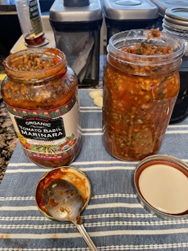
– 1 25 oz jar Marinara Sauce (feel free to check out: Trader Joe’s organic low fat tomato basil marinara or Whole Foods 365 (store brand) oil-free marinara or a sauce of your choice) 

– 1   8-10oz container White Button Mushrooms or any variety you prefer 

– 1 large Zucchini or other veggie you prefer

– 2.5 cups cooked French Lentils- (feel free to check out: Trader Joe’s pre-cooked in a vacuum-sealed container in the produce section as a time saver)

– 4 cloves Garlic 

– Salt + pepper to taste 

– Flat leaf parsley for garnish 

– Vegan Parmesan 

Instructions

  1. Boil water and add the pasta.  Follow the box instructions and strain when it’s done.     Rinse the pasta if you buy gluten-free. 
  2. While the pasta cooks, dice the zucchini, garlic and mushrooms small and add into a                               large non-stick pan. Sauté in their own waters until cooked and reduced (about 5-10 minutes).
  • Once the veggies are cooked, add the cooked lentils and entire jar of marinara into the pan. Add salt and pepper to taste. Stir until combined. 

Add a lid to the pan with sauce and simmer on low for about 10-15 minutes. 
Top your pasta with the sauce and enjoy! Sprinkle on some vegan parmesan if you want!


A jar of food on a table

Description automatically generated Pour unused portions into jars and store in the refrigerator for three or four days. (Meat sauces are recommended to be re-used in two days’ time once stored in the refrigerator.) *

*from Microsoft Edge Copilot: “Spaghetti sauce can typically be stored in the refrigerator for 3 to 4 days. If you want to keep it longer, consider freezing it – it can last up to 3 to 4 months in the freezer. Remember to use airtight containers to prevent freezer burn! 🍝❄️”

If you give this recipe a try, we would love to hear from you!

Provide feedback via lukelive@lukelive.com

CARE FOR THE EARTH is care for ourselves, too.

THIS IS A TERRIFIC QUOTE from Pope Francis. Read this and consider my Question for Meditation that follows. Invite others to the conversation, too. And please, add comments below as the Spirit moves you.

““Rivers do not drink their own water; trees do not eat their own fruit; the sun does not shine on itself, and flowers do not spread their fragrance for themselves. Living for others is a rule of nature. We are all born to help each other. No matter how difficult it is …Life is good when you are happy; but much better when others are happy because of you.”

I invite us to ponder it and get into conversation with the Pope’s words. Keep these questions in mind to make this a meaningful enterprise:

“How do the Pope’s words resonate with you? In what ways may they not? We can often fall into the fatigue of seeing ourselves as constant “do gooders.” Wisdom, too, reminds us that we cannot always make people happy. Yet, clearly, our happiness is tied to our relationships with others and with the world. What is the proper balance for you? What are the blessings and challenges of deepening our commitment to Laudato Si?

God bless us all!

Promoting the EARTH BILL

THE EARTH BILL & THE EARTH ACT

My parish, St Paul the Apostle Catholic Church, New York, NY, has a Laudato Si Team. (For more on the International Laudato Si Network, see https://www.laudatosi.org/faiths/multi-faith-response/ and for a copy of Pope Francis’ letter (encyclical) to the world about Climate Change, go to https://www.vatican.va/content/francesco/en/encyclicals/documents/papa-francesco_20150524_enciclica-laudato-si.html and his sequel entitle Laudato Deum https://www.vatican.va/content/francesco/en/apost_exhortations/documents/20231004-laudate-deum.html )

As we prepare our Summer Newsletter, I want to share our item on the EARTH BILL before Congress and its additional developments:

The “Earth Bill” was introduced in the 118th Congress as H.R. 598 “The Earth Act to Stop Climate Pollution by 2030.” The bill focuses on the three main drivers for climate action: electricity, cars, and food. The bill’s goal is to remediate climate pollution by having the U.S. engage in renewable energy sources; zero-emission vehicles; and regenerative agricultural practices by 2030. The bill’s New York sponsors are Representatives Adrian Espaillat, Jerry Nadler, and Nadia Velazquez. Additional Sponsors and the GOALs of the Earth Bill appear below:

How can you be an advocate for the earth? Become informed. You can read about the “Earth Bill” and the motivation for this legislation here: https://www.earthbill.org

Access a copy of the bill here:

Text – H.R.598 – 118th Congress (2023-2024): Earth Act to Stop Climate Pollution by 2030 | Congress.gov | Library of Congress

Contact your U.S. representative. If your representative is a sponsor of this bill, indicate your support for their efforts. If your representative is not a sponsor of this bill, then ask them to support the bill.

You can either send an email or make a phone call to your representative’s local office. If you decide to call your representative’s office, ask for the legislative aide who is working on

environmental issues. Your call or email can be as simple as stating your name, indicating you are a voter in his/her district, and expressing your support (or asking for their support) for H.R. 598 “The Earth Act to Stop Climate Pollution by 2030.”

You can find your U.S. representative at this site by entering your zip code:

https://www.house.gov/representatives/find-your-representative

If you are interested in joining a network of persons interested in promoting this bill and other environmental issues, you can take the “Earth Bill Pledge” and find a group, share videos and news at:

https://earthbill.org/index.php

NEW DEVELOPMENTS

H.R.219 – Earth Act117th Congress (2021-2022)

BILL

Hide Overview 

Sponsor:Rep. Doggett, Lloyd [D-TX-35] (Introduced 01/06/2021)
Committees:House – Ways and Means
Latest Action:House – 01/06/2021 Referred to the House Committee on Ways and Means.  (All Actions)
Tracker: TipThis bill has the status Introduced Here are the steps for Status of Legislation: Introduced

Access a copy of the bill here: BILLS-118hr598ih.pdf (govinfo.gov)

“H.R. 598 — 118th Congress: Earth Act to Stop Climate Pollution by 2030.” http://www.GovTrack.us. 2023. June 26, 2024 <https://www.govtrack.us/congress/bills/118/hr598&gt;

Details for H.R. 598: Earth Act to Stop Climate Pollution by 2030 – GovTrack.us

H.R. 598: Earth Act to Stop Climate Pollution by 2030

Sort By Name | By Date | By Committee

Sponsor/CosponsorJoined/WithdrawnOn Referred Committees
Espaillat, Adriano [D-NY13]Primary Sponsor
Crockett, Jasmine [D-TX30]Jun 21, 2023Agriculture
Schakowsky, Janice “Jan” [D-IL9]Jun 15, 2023Energy and Commerce
Doggett, Lloyd [D-TX37]Mar 14, 2023Ways and Means
Grijalva, Raúl [D-AZ7]Original Cosponsor
Lee, Barbara [D-CA12]Original Cosponsor
Nadler, Jerrold [D-NY12]Original Cosponsor
Velázquez, Nydia [D-NY7]Original Cosponsor
García, Jesús “Chuy” [D-IL4]Apr 17, 2023
Quigley, Mike [D-IL5]May 2, 2023
Ramirez, Delia [D-IL3]Oct 12, 2023
Jackson Lee, Sheila [D-TX18]May 14, 2024
Thanedar, Shri [D-MI13]May 14, 2024

An original cosponsor was a cosponsor on the date the legislation was introduced. Other cosponsors are shown with the date they joined, or later withdrew.

The table above shows whether the sponsor and any cosponsors are members of any committees that the bill has been referred to, a key predictor of whether this bill will move forward.

ALSO on this webpage, you will find whether other legislators who may be on relevant committees or cosponsors of relevant bills are the sponsor or a cosponsor of this bill. See what follows the heading  Cosponsorship of Other Relevant Legislators

GOOD SHEPHERD SUNDAY HOMILY

Homily by Fr. James DiLuzio 

We live in an angry age. Disputes abound. Collaboration is labeled “compromise” –now an almost derogatory word as if one is “selling oneself out,” and people work so hard to manifest their “brand,” that they dig their heels into the ground, unmovable, intractable, hard-pressed any dimension of our basic, common humanity. Who can lead us out of the single-minded confines of our own willfulness? 

In another angry time, the Catholic Church was fearful of change. Almost every attempt at spiritual renewal was suspect. Onto that 13th century stage appeared two who would eventually become Saints. Their names were Francis and Dominic, each with new vision of God’s care for us, a new emphasis on how to address some of the problems of their age. One of the stories about Saint Francis continues to offer insights. Entitled  “The Tale of the Wolf of Gubbio.”  Gubbio was and is an Italian  village, in the Umbria region of Italy.  At that time, a  wolf was terrorizing  the entire population, attacking sheep, chickens, howling nightly inhibiting sleep, growling so forcefully that all were afeared of going out at night to visit their relatives and neighbors. For the longest time, they commissioned their best hunters, expert marksmen to hunt the wolf and rid them of it, but to no avail.  

Eventually word of a holy man who praised God continually for life—human life and the life of all creatures, who allegedly spoke to animals, reached their village. After much prayer and penance, almost miraculously, some villagers encountered  Francis walking in the forest. Explaining their situation with heartfelt urgency, they pleaded with Francis to come to their aid. Looking lovingly upon them all and said, “Feed your wolf.”  What? was their incredulous reply.  “Feed your wolf,”  is all he said. 

 That night villagers put plates of their leftovers on every doorstep. The wolf’s howling ceased. The next night, in thanksgiving, they placed choice meats and vegetables, and not a sheep was lost. The third night, no sounds from the hen house, and in the morning, they found Francis in the town square, the wolf bowing before the Saint. The wolf became the friend of Gubbio and good be found gnawing on bones and choice meats at all the village festivals. Ω

“Who is the wolf in this story?”  Who is the wolf? “WE are the Wolf.”  Who will  feed us in our anger, our confusion, our fears?  Who will free us from our hateful thoughts?  Today is  Good Shepherd Sunday, reminding is we have here one—and only one– acceptable answer:  Jesus, our Christ. Jesus  took on every aspect of our human nature, underwent every temptation to say to our angry selves: “Hello. I know you — everything about you. Even as you dwell in your dark abode, I have love for you, and I will patiently guide you through every wicked thought, every hopeless feeling. I will fulfill for you, even now, the words of the 23rdPsalm: “Yea though you walk in the valley of death, I will be at your side, to guide you through your anger and temptations to hate, to rage, to despair,” not with condemnation but with redemption. You, too, shall be resurrected. 

Do we think our times are any different from Jesus’ times, or different from any other century “in the course of human events?” Violence, hate, prejudice, fear, human willfulness,  are everywhere and always will be taking hold of us, and others—whenever we are at our most desperate. Fear, lack of trust in God’s timing, God’s providence, frequent failures to acknowledge a vibrant Holy Spirit present amid sin and sadness, instead we lash out, howling  like hungry wolves, losing lost touch with our common humanity. Now is the time we stop justifying our wrath as if we are participating in the wrath of God? The Wrath of God? “Judgement is Mine,” says the Lord, and  Jesus makes clear that “The wrath of God” nothing more than “zeal for souls.”  That’s your soul. That’s mine. 

Jesus  doesn’t condemn us for these thought and feelings, but he does ask us to work with him before we act upon them. Therefore, we need not be afraid to bring even our darkest thoughts and vengeful wishes to Him in prayer, in meditation, and in confession be a priest or anyone we can trust. Saint Paul repeated confirmed time and time again, “Nothing separates from the love of God that comes to us in Christ Jesus.”  Let’s admit, only weeks ago, we cried “Crucify Him, Crucify Him,” and now, in this Fourth week of Easter and Jesus says to us, “Let me Resurrect you. Let me bring you to fullness of life and the peace that only I can give.” He does this by feeding us. He feeds us with His Very Being, in this and every Eucharist.  If we let Him, He will shepherd us today, tomorrow, and the next day, just as He did for the disciples before and after His Resurrection, even as they found, and we, too, may find ourselves in an angry world.

HOLY SATURDAY Meditation from Rachel Held Evans

An inspirational meditation for Holy Saturday from Rachel Held Evans, from her book Searching for Sunday: Loving, Leaving, and Finding the Church:

“Lately I’ve been wondering if a little death and resurrection might be just what church needs right now, if maybe all this talk of waning numbers and shrinking influence means our empire-building days are over, and if maybe that’s a good thing.

Death is something empires worry about, not something gardeners worry about. It’s certainly not something resurrection people worry about.

G. K Chesterton put it this way: “Christendom has had a series of revolutions, and in each one of them Christianity has died. Christianity has died many times and risen again; for it had a God who knew the way out of the grave.” I don’t know exactly what this new revolution will look like, but as the center of Christianity shifts from the global West to the global South and East, and as Christians in the United States are forced to gauge the success of the church by something other than money and power, I hope it looks like altars transforming into tables, gates transforming into open doors, and cure-alls transforming into healing oils. I hope it looks like a kingdom that belongs not to the rich, but to the poor, not to the triumphant but to the meek, not to the culture warriors but to the peacemakers. If Christianity must die, may it die to the old way of dominance and control and be resurrected to the Way of Jesus, the Way of the cross. (pp 225-226)

As the shape of Christianity changes and our churches adapt to a new world, we have a choice: we can drive our hearses around bemoaning every augur of death, or we can trust that the same God who raised Jesus from the dead is busy making something new. As long as Christians are breaking the bread and pouring the wine, as long as we are healing the sick and baptizing sinners, as long as we are preaching the Word and paying attention, the church lives, and Jesus said even the gates of hell cannot prevail against it. We might as well trust him, since he knows a thing or two about the way out of the grave.

“New life starts in the dark,” writes Barbara Brown Taylor. “Whether it is a seed in the ground, a baby in the womb, or Jesus in the tomb, it starts in the dark.”

More on Rachel Evans here:

https://www.wikiwand.com/en/Rachel_Held_Evans

LIVING IN THE ETERNAL NOW

GOSPEL OF JOHN 3: “everyone who believes in him may have eternal life.”

From anxiety to eternity, fear to freedom

At waking, before the demands of the day enter our consciousness, we know who we are and who we are before God. Our being is one with Being, with God, I AM. This is a window into eternity; this is heaven come down to earth. This is eternal life’s prelude. The journey of Faith from Lent to Easter insists we keep cultivating this heavenly reality every day, every week, every month – beyond any liturgical season, every year of our lives.  How can this be done? Not by our own merits, but our openness to grace, to allow ourselves to be caught up in the eternal verities. 

The Scriptures tell us Abraham surrendered in just that way, in the passage about the STARS in THE SKY. Recall:  

GENESIS 15: GOD’S PROMISE TO ABRAHAM

  • But Abram said, “Lord God, what can you give me, if I die childless and have only a servant of my household, Eliezer of Damascus?” 3 Abram continued, “Look, you have given me no offspring, so a servant of my household will be my heir.” 4 Then the word of the Lord came to him: No, that one will not be your heir; your own offspring will be your heir.  5 He took him outside and said: Look up at the sky and count the stars, if you can. Just so, he added, will your descendants be. Abram put his faith in the Lord, who attributed it to him as an act of righteousness.[b]

At first, Abram’s encounter with God was all about Abram – Abram’s concerns, what Abram needed, what Abram was lacking. But then he silenced his own voice and listened to God. The vision of the Stars of heaven helped faith take hold.  Hope became a reality to be lived, savored, and returned to time and time again.

In our first reading we heard the misery of the people exiled, strangers in strange lands. Yet they did not become so caught up in their misery not to recognize the voice of God in a new empire arising: Cyrus, the Persian, inviting people to return to their own lands and worship their own God. Some will choose to stay in their misery, some will return and find new life. 

Analogous events are presented to us every day. Not to get so caught up in our woes and misfortunes that we miss the call to choose hope and PEACE in the moment –a vision of eternity accessible in the here and now. Yes, God’s realm, “the kingdom” requires our attention, and eternity will tend to us if we get out of our own way. The Sacraments are our opportunities to experience heaven here and now, and our touchstones to feel heaven’s presence again, later today, tomorrow, and the next day. One hour of peace a week is not enough for anyone! We must surrender to Christ’s peace continually. This is what Saint Paul meant when he wrote “you will be saved by faith.”

This is what the Church means when she says the Sacraments engage us in eternal verities.  Of course, it is not a matter of our concentration alone. No, it is  – far more a surrender to the Christ who knows our humanity better than we do. The best we can do is admit our distractions, worries, fears at Mass, and merge them into our prayer, consciously asking  Jesus for His help in making us present to deeper realities—seeing our needs in a bigger context.  

A PARENT with an infant: first objective may be to get the child to sleep so mom or dad could get back to  paying bills, or cleaning up dinner, or making phone calls. But when the child smiles and stares into their eyes, they have an opportunity for something greater. There’s eternity in the child’s smile, his or her sparkling eyes. All the work to be done can vanishes from their minds if they let it. If they do – and it is always a choice – they will find themselves in the perfect present – that’s eternity’s realm. If they are smart, they will savor it. They will hear Jesus say, “have faith in God, and faith in me, we are engaging you in eternity.” 

And should the child cry uncontrollably, while they are trying everything possible to soothe and comfort, they might do well to think beyond that moment and recognize in one infants’ pain or fear, the pain, and fears of the universe — the cries of victims of war, of hostage, of insult and degradation. 

Perhaps, with this larger image in mind, think and feel beyond their own frustration, their own fears. Then, they may experience both irony and mystery as the parents find themselves crying along with their infant. And with that vulnerability, of feeling out-of-control, they just might allow the voice of Jesus to say again and again: “Peace I leave with you; my peace I give to you. Not as the world gives do I give it to you. Do not let your hearts be troubled or afraid.” That is when the best decisions can be made = be it for a crying child, for the parent, for anybody in distress. 

We must bring the words of Jesus to heart time and time again. Life comprises far more than just our personal thinking and doing. There is Jesus’s words and ways of thinking that insist eternity is waiting for us in the here and now. The Kingdom of God is at hand. 

Remember the words of the biblical Job, who, in the midst of his suffering cries out: “I will see God:27 I will see for myself, my own eyes, not another’s, will behold him: my inmost being is consumed with longing.”   Eternity beckons even in the most difficult of situations. 

Jesus’ words to Nicodemus are for us, too. But we must believe them, internalize them, appeal to them, surrender to them: “so that everyone who believes in him may have eternal life.” Lord, we believe! And help our unbelief!  

Valentines and Ashes

Fr. James DiLuzio’s Meditation for Lent

Ash Wednesday and Valentine’s Day coalesce on the calendar this year. With our Catholic sensibilities, and in the spirit of penance and renewal both of which ground us in love, this confluence of a holy day and one with popular, secular appeal must give us pause.

Shakespeare, for example, mingled concepts of both love and death in Sonnet 116: 

“Love alters not with his brief hours and weeks, But bears it out even to the edge of doom.”

In the 19th century, Lord Byron authored a poem about grieving an unrequited love in the context of his mortality:

“And when convulsive throes denied my breath, The faintest utterance to my fading thought, To thee—to thee—e’en in the gasp of death My spirit turned, oh! oftener than it ought.”

More importantly, recall the biblical book of poetry entitled The Song of Songs:

“Set me as a seal upon your heart, as a seal upon your arm; For Love is strong as Death, longing is fierce as Sheol. Its arrows are arrows of fire, flames of the divine.”

Does not Cupid’s arrows pierce us to a kind of death? Dying to self, we are reborn with love for another for whom we are willing to sacrifice all. Of course, romantic love can fill us with self-absorption, but it is the Saint Valentine-inspired love that we are exploring here. As we eschew the romantic notions of the secular holiday, we find its religious source of inherent value. Valentine is the story of the martyrdom of not one, not two, but more than likely three persons named Valentine–each death in a different decade of the Roman Empire’s Christian persecution.[1] These men chose to die for Love of Christ and the Church, to accept death so that others might live. This is an imitation of Christ, who willingly confronted the falsehood of society and culture, its lies, and fears—both religious and secular—trusting that his death would lead him to his glorified exaltation on the Cross. Indeed, the CROSS revealed that sacrifice for Love of God, for what is True, liberates people to heavenly realities even as we live and love and die in this world. Ash Wednesday’s urging that we humbly forbear in charitable giving, fasting, and prayer is, in fact, a kind of death, a “little martyrdom” an invitation to daily sacrifices that prove Ash Wednesday / Valentine’s Day’s juxtaposition is not incongruent at all.

Let’s look at a corollary of our faith found in Music and Art. Richard Wagner’s operas Der fliegende Holländer, Tristan und Isolde, and especially the last scene of his epic Ring of the Nibelungen entitled Gotterdammerung, dramatize a philosophy that we can only experience the fullness of love in an apotheosis—a glorification of love’s essence when it culminates in and through death. This insight implies Love’s perfection is heaven’s achievement, that God accomplishes its fulfillment in Christ’s resurrection from the dead offered to all. God’s extraordinary love in Christ offers us, because of Jesus’ humanity the assurance that the Holy Spirit weaves all human love with its heavenly potential and will bring us into eternal life. Thus, every loving experience we have on earth, be it for a beloved person, or through the daily sacrifices we make to build up the kingdom of God, is meant to culminate in heaven. This is Christianity’s promise: every moment of Grace is everlasting. By God’s design, Grace incarnates love in us to bring us to our ultimate communion with the Saints and with God whose Love is all in all.

The Church marks us with Ashes in the Sign of the Cross, revealing to the world that Christianity does not fear death, nor does it fear confessing our sins, admitting our wrongs. The Paschal Mystery empowers us to let death’s reality humble us and renew our consciousness that all are dependent upon God and God’s mercy, deepening our love of God and neighbor. When we die to sin, we rise to LOVE, tenderness, kindness, patience, and charity–the kind of life experiences that confirm God’s presence in the world, strengthening our belief that everyone belongs, and everything is interconnected. Yes, heavenly realities permeate the earth, justifying the belief in eternal life!

Our Catholic Faith engages us in a “re-creation,” compelling us to die to the devil’s deceptions, and self-serving celebrity, and rise to a better occasion in pursuit and cultivation of a “new heaven, and a new earth?” (Rev. 21:1) Not for nothing does that phrase from the Book of Revelation become explicit in Jesus who invites us to love with a generosity of spirit, engaging us in acts of self-sacrifice that will bring us to an ultimate existence of mutual beneficence. In his humanity, Christ allowed himself to be dependent upon God completely, emptying himself to love and love alone. So, too, must we acknowledge our dependence upon God, and because our lives are not our own, love becomes our only choice. Valentines and Ashes make it clear just how indispensable it is that humanity dies to the illusions of our self-importance as individuals, as family, and as a nation, by dying and rising with the Saints who incarnate, in imitation of Christ, the words in John’s Gospel 12: 24

“Amen, amen, I say to you, unless a grain of wheat falls to the ground and dies, it remains just a grain of wheat; but if it dies, it produces much fruit.”  What wondrous love is this?

[1]From Valentine’s Day – Wikiwand: “Numerous early Christian martyrs were named Valentine.[17] The Valentines honored on February 14 are Valentine of Rome (Valentinus presb. m. Romae) and Valentine of Terni (Valentinus ep. Interamnensis m. Romae).[18] Valentine of Rome was a priest in Rome who was martyred in 269 and was added to the calendar of saints by Pope Gelasius I in 496 and was buried on the Via Flaminia. The relics of St. Valentine were kept in the Church and Catacombs of San Valentino in Rome, which “remained an important pilgrim site throughout the Middle Ages until the relics of St. Valentine were transferred to the church of Santa Prassede during the pontificate of Nicholas IV [1288 – 1292]”.[19][20] The flower-crowned skull of Saint Valentine is exhibited in the Basilica of Santa Maria in Cosmedin, Rome. Other relics are found at Whitefriars in Dublin, Ireland.[21]

Valentine of Terni became bishop of Interamna (now Terni, in central Italy) and is said to have been martyred during the persecution under Emperor Aurelian in 273. He is buried on the Via Flaminia, but in a different location from Valentine of Rome. His relics are at the Basilica of Saint Valentine in Terni (Basilica di San Valentino). Professor Jack B. Oruch of the University of Kansas notes that “abstracts of the acts of the two saints were in nearly every church and monastery of Europe.”[22] A relic claimed to be Saint Valentine of Terni’s head was preserved in the abbey of New Minster, Winchester, and venerated.[23]

The Catholic Encyclopedia speaks of a third saint named Valentine who was mentioned in early martyrologies under date of February 14. He was martyred in Africa with a number of companions, but nothing more is known about him.[24] “