
Unknown's avatar

About frjamesdiluzio

January 2022: Director of the Paulist Fathers' Office of Ecumencial and Multi-Faith Relations while continuing to offer some of my missions and retreats. As a missionary priest, actor & singer, Paulist Fr. James DiLuzio developed a Mission/ Retreat entitled LUKE LIVE! Now in his 8th year traveling throughout the USA proclaiming Luke’s Gospel from memory with preaching and song meditations, his goal is to inspire , entertain and exemplify how we may more fully personalize and celebrate scripture in our lives. See www.LukeLive.com Throughout my mission/retreats, I offer many suggestions on how we may share our faith comfortably in all kinds of situations and contexts—highlighting the Paulist charism of Evangelization, Reconciliation, Multi-Faith and Ecumenical Dialogue.

Moments in the Woods : A Movie Review and Personal Reflection on INTO THE WOODS

Summary: There are some fine “moments” in the film INTO THE WOODS
Still, the Script suffers because of omissions from the original stage play (Warning: Spoilers!)

I love fairy tales. I savor the stories, ponder the primordial appeal of their situations and conflicts and delight in the ways good often conquers evil. Since childhood I discovered I had a penchant to enter readily into the characters’ emotional dynamics, explore their desires, motivations and consider the results of their actions. Indeed, I eagerly applied their often hard-earned lessons to my life. So you may imagine how delighted I was to encounter in my adulthood Stephen Sondheim and James Lapine’s musical INTO THE WOODS, a musical parable presenting a variety of fairy tale characters with intersecting stories and dilemma. I attended the original Broadway production shortly after it opened in 1987 which turned out to be the same year I was experiencing a kind of spiritual renewal that deepened my Catholic faith to the point of considering a vocation as a Catholic priest. In fact I had just entered the Paulist Fathers Novitiate. I was instantly drawn to the questions the musical posed — vital, foundational life questions. I realized how I and others respond to these questions prove to be either life-making or life-breaking (and heart-breaking) for ourselves and others. For me, Christianity, Judaism and other world religions ask similar questions while inviting people to develop integral answers. How will we go about seeking our hearts’ desires? Do we see our individual lives as ours alone or are we part of a bigger story? When we encounter conflicts, tragedies and suffering, will we spend our lives condemning and blaming? Do we run from mistakes and their consequences—our mistakes or others’–or shall we work together to find solutions to the damages of collective histories? I was asking myself questions like these as I discerned whether my enthusiasm for stories and reflecting upon them (with others) could extend to the Gospels as a life-time commitment.

Six years after my ordination as a Catholic priest, I was asked to join the Catholic Campus Ministry for the University of Minnesota at the Saint Lawrence Parish Church and Newman Center. One of the Newman Center’s pastoral goals was to create a more integrated community among parish families, seniors and the students. I seized on the opportunity to produce, direct INTO THE WOODS as one of my projects. I focused on the ways INTO THE WOODS’ plot and themes contributed significantly to conversation about “community,” its challenges, rewards and essential values. The play became a collaborative community effort. The end result of our two months of rehearsals and short run of three performances proved a spirit-filled, poignant and highly meaningful experience for all who participated in it and for all came to see it. Since then, memories of our production and many aspects of the musical itself, continue to engage my mind and imagination. Naturally, I anticipated the film version of INTO THE WOODS with considerable excitement.

I am happy to report there are many moments in the INTO THE WOODS, the Movie, that make it a worthy investment of time and reflection. There are moments that are magical, insightful and engaging. At the same time, I am sorry to relate, the beauty found in many of the film’s individual parts does not coalesce into one, great excellent film. Although good, the movie version of INTO THE WOODS is not a great film in the way THE WIZARD OF OZ or SNOW WHITE AND THE SEVEN DWARFS are classic movies.

First, the good news: The performances are practically perfect. Meryl Steep achieves true “perfection” in her portrayal of The Witch. Her expressions, nuanced delivery and insights into a complex character ring true to many of the light and shadow dimensions in all of us. She sings wonderfully, too, especially in the dramatic penultimate number LAST MIDNIGHT! Brava! The Princes played by Chris Pine and Billy Magnussen are first rate in a very polished performance of the AGONY duet; Anna Kendrick’s is more than captivating as Cinderella, Lilla Crawford’s Little Red Riding Hood fitfully fun and Daniel Huttlestone’s Jack filled with charm. Emily Blunt as the Baker’s Wife and James Corden as the Baker –the central characters in the drama–are fine and appealing individually but there are not enough scenes in the screenplay to allow them to develop the chemistry needed to convey a deep, marital bond and evoke deeper empathy for them in the final scenes. In other aspects, the film’s orchestrations are lush and beautiful and the art direction is compelling, although I found it too dark at the onset—an example of what I think is one of the film’s most significant shortcomings.

And now, my personal qualms: What happened to all of the lighthearted comedy in the original script? Was it director Rob Marshall’s or screenwriter James Lapine’s decision to delete moments that brought a sense of balance and more nuanced character portrayals to the story? INTO THE WOODS is dark, and far more serious in the second act than the first, but the film moves into the darker elements too quickly and we don’t get to enjoy the characters enough before we see them grappling with what represents some of life’s greatest issues. Indeed, the fact that key songs and scenes of the original first act were deleted truly inhibit the audience from experiencing an appropriate catharsis in the film’s climax. Without the comedy (and, for example, the comedic song OUR LITTLE WORLD for The Witch and Rapunzel as featured in the 2002 Broadway revival) audiences are deprived of experiencing the more positive aspects of the characters, making it more difficult for us to relate to their inner shadows and failings. INTO THE WOODS is most effective when it story highlights its innate contrasts from light to dark in its characters and plot.

Secondly, director Rob Marshall and screenwriter James Lapine (basing the script on his play), erred in not focusing sufficiently on the Baker and His Wife as central characters from the onset. The loss of the stage play’s song MAYBE THEY’RE MAGIC, its reprise and some of its dialogue in the first act needed to have been carried over to the screen to enhance audience identification, and care for, this all too human couple. This segment is so important in my view that I invite you to explore it with me.

You will recall the Baker and his Wife have to undo a curse of childlessness by providing the Witch with various articles, including a cow as white as milk. The couple offers the impoverished Jack and the Beanstalk five beans in exchange for his cow MILKY WHITE. Jack accepts the deal once he is told the beans are magic and that he eventually may be able to buy the cow back. The couple, however, have no certainty that the beans are magic at all or that the cow’s fate will be such as to allow Jack to be reunited with it. For those who only know the film, consider now your responses to the Baker and His Wife, and the film in its totality, if the following were included:
(Note the dialogue prior to the song was kept in the screenplay. (SONG LYRICS IN ITALICS)
BAKER: Magic beans! We’ve no reason to believe they’re magic! Are we to dispel this curse through deceit?
WIFE: No one would have given him more for that creature. We did him a favor. At least they’ll have some food.
BAKER: Five beans!
WIFE: IF YOU KNOW WHAT YOU WANT, THEN YOU GO AND FIND IT AND YOU GET IT—Do you want a child or not? –AND YOU GIVE AND YOU TAKE AND YOU BID AND YOU BARGAIN OR YOU LIVE TO REGRET IT. THERE ARE RIGHTS AND WRONGS AND INBETWEENS NO ONE WAITS WHEN FORTUNE INTERVENES. AND MAYBE THEY’RE REALLY MAGIG. WHO KNOWS? WHAT YOU DO WHAT YOU DO, THAT’S THE POINT, ALL THE REST IS CHATTER. IF THE THING YOU DO IS PURE IN INTENT, IF IT’S MEANT, AND IT’S JUST A LITTLE BENT, DOES IT MATTER?
BAKER: Yes.
WIFE: No, WHAT MATTERS IS THAT EVERYONE TELLS TINY LIES-WHAT’S IMPORTANT, REALLY, IS THE SIZE. ONLY THREE MORE TRIES AND WE’LL HAVE OUR PRIZE. WHEN THE END’S IN SIGHT, YOU’LL REALIZE, IF THE END IS RIGHT, IT JUSTIFIES THE BEANS!
Later, when the Baker prepares to procure Little Red Riding Hood’s red cape (another ingredient the Witch requires to make a potion to undo the curse of childlessness), he determines whether or not he can justify stealing it in this reprise of MAYBE THEY’RE MAGIC:
BAKER: IF YOU KNOW WHAT YOU NEED, THEN YOU GO AND YOU FIND IT AND YOU TAKE IT—Do I want a child or not? IT’S A CLOAK, WHAT’S A CLOAK? IT’S A JOKE, IT’S A STUPID LITTLE CLOAK. AND A CLOAK IS WHAT YOU MAKE IT. SO YOU TAKE IT. THINGS ARE ONLY WHAT YOU NEED THEM FOR, WHAT’S IMPORTANT IS WHO NEEDS THEM MORE –
The impact of the song and its reprise reveal insights to the characters the film doesn’t provide elsewhere. A tragic omission! The fact the WIFE follows through on her rationalizations in this and subsequent scenes while the Baker does not (he returns the cloak after stealing it), prepares us more fittingly for their ultimate fates at the film’s climax. The movie needed to retain scenes such as these.
Other problems with the film concern additional cuts made to the original script and /or the creators decision not to expand upon it. Were these limitations imposed on director and screenwriter by Disney limiting the film’s budget? Had INTO THE WOODS been financed as fully as Angelina Jolie’s MALEFICENT (enjoyable, overdone, but with a more cathartic climax) might we have discovered a classic film worth returning to again and again? (That was my hope.)
I invite you to join me in speculating about how a fine film might have become a great one. In addition to the Baker and His Wife dimensions already noted:
1. (What if) the Baker and his FATHER’s relationship was highlighted as in the stage play. Father and son relationships are essential in life. Had the film shown more interaction (be father “real” or “ghost,”) the Baker’s character (and James Cordon’s portrayal) would have evoked deeper feelings from the viewer. And we wouldn’t have been deprived of hearing the Baker sing his discernment of his fate in the poignant NO MORE — a sure-fire moment of audience identification with the character as presented on stage.

2. (What if) we could have seen Cinderella at the Ball! Her sung monologue HE’s A VERY NICE PRINCE (effectively delivered by Anna Kendrick) could easily have been modified to make it an “in the moment” reflection as she meets, dances with the Prince and flees.

3. (What if) Little Red Riding Hood’s and Jack and the Beanstalk’s sung soliloquies also were adapted as “in-the-moment” events. Their songs are fine “as is” on the stage where theatrical form and context are more welcoming to asides and soliloquies. Film, however, benefits more from “in the moment” storytelling.

4. (What if) we were able enjoy the Witch in the more light hearted moments afforded her on the stage, especially through the her duet with Rapunzel entitled OUR LITTLE WORLD — a comic and revelatory song conveying of the brighter sides of the Witch and Rapunzel’s relationship. (Exemplifying another one of the story’s points: few, if any, people are all evil and malice.)

5. (What if) All of the verses of NO ONE IS ALONE could have been retained. This is the most beautifully moving song in the show and audiences would have benefitted from hearing it in its entirety. Here’s the missing lyric:

“YOU MOVE JUST A FINGER, SAY THE SLIGHTEST WORD, SOMETHING’S BOUND
TO LINGER, BE HEARD.”

To conclude, I would like to offer ideas I have always had about possible enhancements and outright changes to the original script had the creators pursued other options. Leaving all criticism of the play and film aside, I invite us to INDULGE OUR IMAGINATIONs and explore some beyond “THE WOODS” WHAT IFS?”

a. One reason the Witch is the Witch (mean, ugly, manipulative) is because she lives UNFORGIVEN by her mother over the loss of the beans. WHAT IF, after singing LAST MIDNIGHT, we find the WITCH in the underworld? Two possibilities here: Her mother could have gained some wisdom in the world of the dead and forgiven her daughter. Or, instead, the Mother remains unremitting but the Witch learns that she can forgive herself. Then when the Witch’s ghost (or the Witch-in-the-flesh) returns to sing CHILDREN WILL LISTEN, the audience would have seen her transformation. That experience could contribute significantly to the song’s beauty and wisdom.

b. What if the Little Red Riding Hood’s dialogue with Cinderella prior to the song NO ONE IS ALONE shaped the play’s climax? I quote the original dialogue from the play and used in the film:
LITTLE RED RIDING HOOD: I think my granny and my mother would be upset with me.
CINDERELLA: Why?
LITTLE RED RIDING HOOD: They said to always make them proud. And here I am about to kill somebody.
CINDERELLA: Not somebody. A giant who has been doing harm.
LITTLE RED RIDING HOOD: But the giant’s a person. Aren’t we to show forgiveness? Mother would be very unhappy with these circumstances.
The song NO ONE IS ALONE invites us to evolve our own responses to Little Red Riding Hood’s question “Aren’t we to show forgiveness?” WHAT IF the collective decision of the characters was not to kill the GIANT’s WIFE but assuage her wrath and make amends for her husband’s death, even though, their experience proved (as the Witch insisted) “you can’t reason with a Giant.”
As is, the original script conveys that, at least at times, violence inevitably must be used to overcome violence – a feature evident in many fairy tales and in almost all action adventures and human history. What would we do without the great battle scenes in films and in our collective national identities? In many ways “the strong warrior archetype” has to win out. But many great works of literature, art and the Bible itself probe alternative responses to violence —-alternatives that offer greater benefits toward human advancement. Yes, the Bible is filled with examples and teachings that justify violence, war and encourage condemnation and shunning others in both Old and New Testaments. Yet much modern scholarship invites us to see these as opportunities to explore the consequences and results of these orientations and actions rather than follow them as directives. Furthermore, in its totality, Scripture does evidence a gradual, in-depth understanding of God that is far more benevolent in its totality than in its individual parts. We are invited to see that any particular biblical passage represents but a stage in the people’s faith development, each stage evidencing very human realities in our wrestling with God, morality and free will.* What appeal would INTO THE WOODS have if it had not defaulted on the more traditional “kill the Giant” fairy tale ending? You decide!
c. If we would find the WITCH forgiven or having forgiven herself, she could have returned to shrink the Giant down to human proportions. What then? The characters might be forced to reconcile and collaborate on the future rather than grieve the past. Like Shakespeare’s AS YOU LIKE IT, TWELFTH NIGHT and MIDSUMMER’S NIGHT’s DREAM, the story would conclude with music and dancing as those plays are often staged with our fairy tale characters celebrating a more universal, common humanity. As it is, the remaining character of INTO THE WOODS achieve that, too, but with the weight of having killed the GIANT’S WIFE. Of course, if we altered the script to offer that kind of “happy ending” in which violence is averted, would the result prevent audiences from entering into the quandary of violence, self-defense and benevolence on their own? Is that a greater value? And, of course, there is the reality there will always be evil in the world. Giants and witches and terrorists and hate and revenge in human hearts will forever plague our planet. In the end, for all my musings, perhaps it is good that we leave INTO THE WOODS as it was on stage and as it is on film. We all have to write our own stories anyway.

*See my summary of STAGES OF FAITH DEVELOPMENT in the Bible and Our lives at http://www.lukelive.com/gallerymedia/approaches-to-scripture/
Jesus’ Humanity: A great thought for today and everyday

A beautiful reflection on Jesus’ humanity from Founder of the Paulist Fathers, Isaac Father Isaac Thomas Hecker, CSP . This comes from his Epiphany Sermon and featured in Hecker Reflections email subscriptions:

Our Lord is introduced to us as a true child of an earthly mother, wrapped in swaddling clothes and laying in a manger. He was not above participation in social amusements and gave his sanction to a marriage ceremony and to further the enjoyment of the guests, at the suggestion of his mother, he change water into wine. His eyes were open to the beauties of nature. He was charmed with the lilies, studied trees, read the meaning of clouds, watched the birds build their nests and listened with delight to their cheering song. The sowing of seed, the ripening harvest the plays and dancing in the marketplace; these and all the varied events of daily life and of human interest, attracted his attention and furnished illustrations for those parables s of his in which he conveyed to men his sublimist of lessons.

For more insights from Fr. Hecker and his cause for sainthood go to: https://www.facebook.com/FatherHecker

Homily for the First Sunday of Advent Year B 2014 Fr. James DiLuzio

The Christmas songs are playing in the radio and the stores are celebrating already, beckoning our purchases to help us get in the holiday mood. Moreover, it seems our entire economy is dependent on buying Christmas gifts – an annual activity that has, in effect, become our patriotic duty. If our merchants don’t get in the black, if they are left with too much inventory at the end of the year, than the economy slumps and allegedly, everyone is in trouble. Indeed, some of theses merchants are our Church members and friends; family members are store clerks and sales people in the malls. And then, of course, there are the charities with a last appeal for their end of the year budgets. Even if we don’t have the money at hand, we feel obligated to take out the charge cards and run. Moreover, if we are honest, our feelings of self worth are often tied to gift-giving and receiving. Added to this, many of us cling to unrealistic expectations of what Christmas can accomplish in us and in others No wonder Advent and Christmas bring anxiety and frustration. While Spirituality invites us to simplify our lives, to do with less so others who have less may be brought up to our standards, we can feel discouraged, that we are letting many people down if we don’t buy enough gifts and treats to keep the economy going. We want to cultivate spiritual values, explore the values of patience and the benefits of waiting, of delayed gratification at the same time we feel obligated to follow the crowd, summon the cheer, to feel what we are supposed to feel rather than address how we truly feel. The office parties have already started. What are we to do?

To start, we trust in our biblical heritage and allow the past to inform our present. We turn to our ancestors in faith. Exiled by the Babylonians, the people of the tribes of Judah were filled with anxieties and conflicted feelings. They found themselves once again strangers in a strange land. Their beliefs and customs were so very different from that of their neighbors and the societies of Babylon and Persia (today’s Afghanistan, Iraq & Iran. The prophet Isaiah and his disciples articulate a prayer on their behalf : “Why do you let us wander, O Lord . . . for you have hidden your face from us and have delivered us up to our guilt.” Did God truly abandoned them OR have they truly abandoned God? The answer is neither: God never abandons His own. Yes, the people are in exile, but didn’t God send Prophets to them? Yes! ISAIAH was there for them. And don’t forget Jeremiah, Ezekiel, Amos, Malachi and all the rest. And they had not abandoned God. They brought their questions and expressed their feelings to God- which is exactly what believers are invited to do. And along with their questions, they pondered life’s meaning and purpose, they pondered God’s plans.

Wisdom of prophets and our own human experience confirm that God’s most precious gift to us beyond life itself is free will. It’s the only gift that distinguishes humanity from all other creatures. FREE WILL is the gift that allows us, as the prophets say, “to wander as we will.” And so as Advent begins, faith invites us to make choices that bring us closer to the Spirit of the Living God. We need to set aside time to ponder and pray about what that might mean.

First we must admit that many of our problems and sufferings are of our own making. That includes our Advent anxieties and Christmas dilemmas. Humbly acknowledging our contributions to our own anxieties IS the beginning of wisdom. Wisdom also invites us to come down to earth and acknowledge our dependence upon God. That kind of humility aligns us with all living things who share with us the very air we breathe and water we drink. Never alone but always interconnected with the beauty, majesty and mystery of creation. That’s the mindset that cultivates A “Mindfulness of God in All Things.” That’s the spirit we need for Advent, Christmas and all year round. Seeing a connection between our life stories and that of Jesus will accomplish that, too. And so with these truths in focus I’ve prepared a retreat for you Sunday night to assist you in cultivating humility and awe and wonder in God’s presence, whatever your circumstances, whatever you are feeling these days. And I have tools to offer you that will empower you to see Jesus’ story as your story and your story as His because of God’s care for you and our world.

I’ll start by affirming God cares about you and your feeling — even your discomforting feelings, your sad feelings, your feelings of resentment and hurt and angers. People may not respond well to them, you may not even accept them with in yourself, but God does. Jesus does. It is why he took on the fullness of our humanity to be with us in and through all feelings and corresponding thoughts – not to judge or condemn but to transform them through his loving care, understanding and His wisdom to fortify and alter whatever kind of wisdom we may or may not have cultivated on our own. If you chose not to come to the retreat Sunday night, at least now I am leaving you with this thought: how much God cares about you and your feelings and the situations you find yourself in. And believing how much God cares about you makes all the difference in the choices you make for yourself and the care you may potentially demonstrate toward others. It will make a difference in how you experience Advent and celebrate Christmas.
We prayed with Psalm 80 today: (I’ll paraphrase in more conventional language): make us humble and contrite, O God, so we may and stand in continual awe of YOU who cares for us. Has God abandoned us? Certainly not! Has JESUS abandoned us? JESUS has given us His Word and His sacraments and one another. Jesus has bestowed the Holy Spirit. We are his Church and we are here amidst the malls, the decorated and un-decorated homes and the stacks of bills. DON’t Pass us by or takes the gift of faith for granted. The signs of the times require faith. They require a commitment to Christ and time spent cultivating that relationship to put all of our relationships in proper perspective. Commitment opens our eyes wide to see the many ways JESUS Comes to us, has come to us, will come to us in all hours of the day and night just as He comes to us now in this Word and EUCHARIST so he will come at the end of time. Psalm 80 also articulated this question: “Would that you might meet us doing right, O God! Oh, that we were mindful of you in our ways!” In what state of mind and heart do want to be this Advent, this Christmas and beyond. You have choices before you. Will you choose to participate in the parish Advent retreat and / or spend time in private prayer or other spiritual pursuits? What will they be? One thing for sure, we all need spiritual support to engage in our culture lest our culture engage us in what is beyond our control, in all that is material alone, gratification that is fleeting and disposable like the Christmas trees drying out on the curbs on or after New Year’s Day.

The choice is before you. You have chosen Word and EUCHARIST today. They are God’s gifts of comfort and joy to you in the here and now. If you would like to perpetuate these spiritual gifts and cultivate them throughout your nights and days, make choices like retreat and the many spiritual opportunities offers you here at Saint Sebastian’s in the weeks and months ahead. To use the popular marketing analogy: You contribute to the Church with time, talent and treasure. Do you want more for your money or less? And like our retreat, today’s EUCHARIST is here for the taking and all are invited to see and hear what God has in store for you now and always!

Would you like to hear a recording of excerpts from my Luke Live! Retreats? You’ll find an order form at

LukeLive CD

MP3 available in 2015

Suggestions for a Prayerful Thanksgiving: Cultivate Gratitude Throughout the Day

First Thanksgiving Prayer: Before or during Hors D’oeuvres
Ask your guests to answer this question: What gift have I received from last Thanksgiving ‘till now that I still use and/ or treasure?
Option: Write them down without signatures and place them in a small basket (reserved For the First Course Activity.).

Second Thanksgiving Prayer: Traditional Grace
FIRST COURSE ACTIVITY: Throughout the first course (soup/salad), pass he basket around with “treasured gift” papers. Each person takes a paper and reads it aloud. Guests try to match the “owner” of the item.

Third Thanksgiving Prayer: Between first and second course:
1. What event or circumstance was most significant for me this year?
2. What have I learned or still learning from the experience?
Fourth Thanksgiving Prayer: After the Main Course or Before Dessert:
1. What am I most thankful for? And / or
2. What am I most looking forward to?

AFTER DINNER ACTIVITY: Before the football game or during clean-up:
1. Together recall the Thanksgiving Poem: Over the River and Through the Woods – Who can remember the most verses? For a copy of the complete poem:
http://en.wikipedia.org/wiki/Over_the_River_and_Through_the_Wood
2. If no one knows it, spend the clean-up time memorizing it together. Any poems about Autumn anyone?
Purpose of the Game: Poetry opens us up to the spiritual and to
appreciation of ritual: memory, context and associations.

Concluding Thanksgiving Prayer: Before Farewells or before the first person has to leave:
1. Christians: Have someone read Thanksgiving Gospel Reading: Luke 17: 11 -19 (1 Thankful Leper out of 10) Jews: ISAIAH 55;
2. Discussion:
a. Has Christ healed us in any way today?
b. For whom and for what do we still need to pray?
c. Close with extemporaneous prayer, Our Father and Glory Be.
PLEASE & THANK YOU GAME: Ask everyone to bring $1 to dinner. (Have extra bills around for those who forget.). Whenever anyone forgets to say P&TY from first grace to end of dinner (please pass the potatoes; thank you), he or she must put their dollar in a basket. Proceeds go to your parish or a charity of choice. Remaining Dollars in people’s pockets may be contributed voluntarily at the end of the day.

HOPE–How Christianity Can Play its Part on the World Stage Part 2

In September I wrote about the importance of HOPE and decided to pursue the topic further. I wrote: “In the coming weeks I will explore exactly how the Christian story, its history and daily experience of Christians today supports this HOPE. I invite Christian readers to share their insights so that together we may embrace Resurrection Hope most fully. I also invite people of other faiths and backgrounds to share HOPE perspectives in their beliefs, concepts and/or faith experiences. Together we just might be able to identify and apply common ground principles, evidencing hope through mutual respect and celebration of the best of our humanity.” So, now we begin:

HOPE as a noun is defined in a variety of ways in a number of dictionaries. Here are three citations:

New Oxford American Dictionary

http://www.oxforddictionaries.com/us/definition/english/hope

1. A feeling of expectation and desire for a certain thing to happen. 2. A person or thing that may help or save someone. 3. Grounds for believing that something good may happen. 3. Archaic; a feeling of trust

Merriam-Webster Dictionary  http://www.merriam-webster.com/dictionary/hope

1.The feeling of wanting something to happen and thinking that it could happen; a feeling that something good will happen or be true. 2. The chance that something good will happen. 3.Someone or something that may be able to provide help; someone or something that give you a reason for hoping.

The American Heritage Dictionary

https://ahdictionary.com/word/search.html?q=hope

1. a. The longing or desire for something accompanied by the belief in the possibility of its occurrence: He took singing lessons in the hope of performing in the musical. b. An instance of such longing or desire: Her hopes of becoming a doctor have not changed. 2. A source of or reason for such longing or desire: Good pitching is the team’s only hope for victory. 3. often Hope. Christianity The theological virtue defined as the desire and search for a future good, difficult but not impossible to attain with God’s help. 5. Archaic. Trust; confidence. Idiom: hope against hope To hope with little reason or justification

Notice that the New Oxford definition does not specify that “hope” is necessarily for a “good” until the 3rd definition of the word. Merriam-Webster offers “wanting something “good” in its first definition; American Heritage doesn’t specify “good” until the fourth definition with the specification Christianity. The implication, of course is that,although all people have goals and dreams which undergird “Hope,” unfortunately, not all “Hopes” are oriented toward a “good.” Some hope for an adversaries untimely demise. Some have expectations of entitlement over and against fairness, justice or mercy. Some cling to desires for advancement at the expense of others. That’s the “Shadow” side of Hope and I will devote another blog to that. For now, I would like to focus on Hope for universal goods.

The Hebrew Scriptures embraced by Christians are filled with examples of Hope expressed in elegant, poetic words and images. Many echo God’s promises for future fulfillment and harmony for the human race. Here are just a few:

“And afterward, I will pour out my Spirit on all people. Your sons and daughters will prophesy, your old men will dream dreams, your young men will see visions.” (Joel 3: 1)

“In the days to come, the mountain for the Lord’s house shall be established as the highest mountain and raised above the hills. All nations shall stream toward it, many peoples shall come and say, ‘Come, let us climb the Lord’s mountain to the house of the God of Jacob. That he may instruct us in his ways, and we may walk in his paths.’ For from Zion shall go forth instruction, and the word of the Lord from Jerusalem. He shall judge between the nations and impose terms on many peoples. They shall beat their swords into plowshares and their spears into pruning hooks; one nation shall not raise the sword against another, nor shall they train for war again.” (Isaiah 2: 2-4)

“But a shoot shall sprout from the stump of Jesse, and from his roots a bud shall blossom. The spirit of the Lord shall rest upon him; a spirit of wisdom and of understanding. A spirit of counsel and of strength, a spirit of knowledge and of fear of the Lord, and his delight shall be the fear of the Lord. Not by appearance shall he judge, nor by hearsay shall he decide but he shall judge the poor with justice and decide aright for the land’s afflicted. He shall strike the ruthless with the rod of his mouth, and with the breath of his lips he shall slay the wicked. Justice shall be the band around his waist, and faithfulness a belt upon his hips. Then the wolf shall be a guest of the lamb, and the leopard shall lie down with the kid; the calf and the young lion shall browse together with a little child to guide them. The cow and the bear shall be neighbors, together their young shall rest; the lion shall eat hay like the ox. The baby shall play by the cobra’s den and the child lay his hand on the adder’s lair. There shall be no harm or ruin on all my holy mountain; for the earth shall be filled with knowledge of the Lord as water covers the sea. On that day, the root of Jesse, set up as a signal for the nations, the Gentiles shall seek out, for his dwelling shall be glorious.” (Isaiah 11: 1-10)

“All you who are thirsty, come to the water! You who have no money, come, receive grain and eat; Come without paying and without cost, drink wine and milk. Why spend your money for what is not bread; your wages for what fails to satisfy?” (Isaiah 55: 1-2)

Building upon the Judaism of Jesus (who quotes Isaiah 61: 1-2 and Is 58: 6-7 as he begins his public ministry) , Christian HOPE grounds itself in the Hebrew expectation for “The Day of the Lord” – the time when God will right all earthly wrongs and goodness and justice will prevail. Good will be rewarded and evil punished. This belief is a bedrock of the Jewish Faith. This WILL happen – if not “at once,” than ultimately “at last!” (See Malachi 3:19, Joel 2: 1 ff, Zephaniah 1: 14 ff). In the interim, what is promised for the future may be achieved in part in the here and now. Thus, we articulate “hope” in the popular phrase “the now and the not yet,” for while Jesus insists his followers “pray for the coming of the kingdom,” he also urges us to do our best to achieve it. (Luke 11: 28) The harmony we desire for the culmination of the world is possible the more we make our daily decisions out of love of God and neighbor. Today, Christians and Jews are bound by this same directive as are people of Islam and other world religions who embrace this tenet.

More to come in my next blog entry!

“The Mystery and Beauty of God” is Immeasurable

In this weekend’s Sunday ARTS section of the NY TIMES (distributed on Saturdays in NYC), Kip Thorne, a theoretical physicist and executive producer for the upcoming film ‘Interstellar’ is cited in a conversation among the film’s three leading players. Actor Matthew McConaughey says “Everything you ask him, he goes, “Well, it’s not this or this. It’s both.” I was like, “Well, where’s the end?” He’s like: “That’s the point. There is no end. No answer you have in astrophysics should ever not lead to another question.” The same answer applies to TRUE SPIRITUALITY. We can know and experience God and yet there will always be more to know and other aspects far beyond our comprehension.  Now there’s an invitation to humility for people of all religions.

A Modest Proposal: Tips for McDonald’s Workers

The article on Fast-Food Workers in the September 15 issue of the NEW YORKER is worth our time:  http://www.newyorker.com/magazine/2014/09/15/dignity-4

I am particularly concerned about this statement:  “A recent study by researchers at the University of California-Berkeley and the University of Illinois at Urbana-Champaign found that fifty-two per cent of fast-food workers are on some form of public assistance.” (i.e., Food Stamps and Medicaid).”  And this one: Most of their employees today are adults—median age twenty-eight. More than a quarter have children” (i.e., not high-school and college students working part-time, especially since the 2008 recession.)

The volatile discourse, of course, is on the hot topics of union organization, government intervention on minimum wage and the reality of government assistance in food-stamps and Medicare. It seems at least half of the American population wants to do away with all of these things.  So often I hear people insisting that there be no government involvement in setting minimum wages, no government assistance for low-wage workers and no unions.

Here’s an option I haven’t seen in print yet:

Tip each MacDonald’s cashier as you would tip a restaurant worker – that is offering 20 % of your bill. (That’s $2 dollars for every $10 you spend at McDonalds, Burger King, Wendy’s etc.)  The cashiers would then share the total in tips with the cooks and janitors, etc.  Would Americans agree to do this?  Would the amounts make a difference?

If the answer is “YES!” then all fast-food workers could potentially afford part-time College courses and get out of the Fast Food industry.  (Yay!)   They could then turn over the entire fast-food worker population to our high school and college part-timers.  (It’s already been proven that students would have to make far more than minimum wage to support themselves through even community colleges.)

Now, of course, there still will be adults with less talent or intellectual abilities who would stay on as fast-food workers, but at least with this “Americans are Generous and Will Tip Program”  they could live on salary and tips and maybe have a family or live alone or with friends if they wish.

The success of this program would prove two things:  Americans ARE generous at heart AND American Fast-Food Corporations are NOT.  Even with Americans subsidizing fast food worker’s salaries through tips, the Fast Food Corporations would maintain their profits while continue to spend millions of dollars in legal fees and payments to the “NRA” (National Restaurant Association) which is dominated by the major fast food and other chain restaurants.  Why would they do this?  Because they would want to maintain and expand their many successful accomplishments defeating the following: “minimum-wage legislation, paid-sick-leave laws, the Affordable Care Act, worker-safety regulations, restrictions on the marketing of junk food to children, menu-labeling requirements, and a variety of public-health measures, such as limits on sugar, sodium, and trans fats” as noted in the New Yorker article.

My last thoughts:  Can churches, synagogues, mosques and temples be of any help in bringing these and other issues into the greater public discourse? Wages and their impact on society are moral issues after all.  The topic is too complicated for the pulpit beyond posing an open-ended question or two while reflecting on a Scripture passage.  Parish Social Justice Committees and Religious Education Directors would need to offer a series or a seminar on the article with or without a featured speaker.  But do all of our churches, synagogues, mosques and temples have Social Justice Committees and /or do they want them?  Would congregants attend these seminars?  This answer to that may or may not depend on whether or not there fast-food workers among their worshipers or within the neighborhoods they serve.  Still, we are left with the question: shall we support fast food workers in either their desires to organize unions, get the government to legislate a $15. Minimum Wage or support them with alternatives such as tips and food pantries?   Or do we let them take care of themselves if they are able?

Any thoughts?

Homily on Matthew’s Gospel Chapter 22: 15-21 for Sunday, October 19

Homily for the Twenty-Ninth Sunday OR 2014;

Rev. James M. DiLuzio C.S.P.   (Homily based on Biblical Readings to be found at the end of this post.)

In the beginning, God created human beings as social beings, inter-dependent and eventually, capable of abstract thinking.  This gift motivated us to seek wisdom, search for meaning, foster understanding and seek God.  We Christians understand God as Relationship itself—an essential interdependent primacy of Father, Son and Spirit – a God who for no other reason except love—frivolous love, magnanimous love, relentless and unconditional love—places RELATIONSHIP as the highest value of life.  Therefore Saint Paul was inspired to write in his Letter to the Romans chapter 8: that NOTHING “will be able to separate us from the love of God in Christ Jesus our Lord.”  “Nothing” is very important because it includes all of our sins and the sins of the world.  By putting relationship first above all things, God’s spirit is the foundation of Hope, the inspiration for Hope with Jesus as its ultimate and complete human expression. So why do we need Caesar?  With Christ at the center of our lives, why do we need government?  Obviously, not everyone centers his or her life in God and for God.  Not everyone is grateful for life let alone grateful to God for it.  We need government because sin is everywhere rupturing relationships — relationships with one another, among nations, with creation and with God.

Make no mistake:  “Repay to Caesar what belongs to Caesar and to God what belongs to God” is not about the need for separation of Church and State.  Instead, Jesus’ statement is a warning that while we do need governments, we need to keep the state’s claim on us in perspective.   True, without government, we the people of the world would devolve into an anarchy of “every man for himself, every woman for herself.”  We need government because not everyone takes the Ten Commandments to heart, nor accepts the Beatitudes as his or her life-time goal.

Furthermore, we need governments because, as biblical history makes clear, human beings intrinsically insist on having figure heads, spokespeople and leaders. It’s in our relational DNA. So we’ve learned from the time of the Judges and Kings (from Gideon to David to Zedekiah) God can and does use individual leaders of peoples—emperors, governors, senators—for God’s good purposes.  And God uses secular as well as faith-centered leaders.   Isaiah the prophet highlighted this fact in celebrating the pagan Cyrus of Persia’s decision to allow peoples exiled by Nebuchadnezzar II of Babylonian to return to their native lands including the Israelites and Judah-ites to the land of their ancestors.  Still, in the course of human events, wise and benevolent acts on the part of world leaders doesn’t seem to happen very often.  Clearly, each individual’s capabilities as leader are limited just as we, too, are limited.  The lesson here is clear: the centrality of God-centered life.  It offers the only genuine hope for us, whether our leaders seek Divine guidance or not.

Thus today’s Scriptures invite us to recognize that part of the Church’s hope for this world is our participation in government.  To give God the glory that is due, we must support our local communities and continue to cultivate and improve our personal and national outlooks.  For God is all in all.  The faithful must keep up with the signs of the times, read the newspapers, watch a variety of news programs, and discuss the issues respectfully and lovingly with people who hold different points of view from your own. And when you do, be mindful that a human being is far more than an expression of a political theory, an economic entity or a mere consumer of goods.

So, by all means, register, vote and encourage others to do so. But as you do, register this:  you are not voting for Messiah. We already have one.  The more we cultivate continual worship of the Living God in our hearts, minds bodies, the more we seek out friendships beyond our “comfort zones,” Christ will reconcile the haves and the have-nots, the weak and strong.   Through Christ, in Christ and with Christ, you and I will find that to be fully human is to celebrate the Divine Spark in all of us.  All of us.  Make sure our leaders know that. And isn’t that what this and each and every Eucharist is about?

FYI:  Here are the Biblical Readings:

Twenty-ninth Sunday in Ordinary Time
Lectionary: 145

Reading 1                                                                                                                                                          IS 45:1, 4-6

Thus says the LORD to his anointed, Cyrus,
whose right hand I grasp,
subduing nations before him,
and making kings run in his service,
opening doors before him
and leaving the gates unbarred:
For the sake of Jacob, my servant,
of Israel, my chosen one,
I have called you by your name,
giving you a title, though you knew me not.
I am the LORD and there is no other,
there is no God besides me.
It is I who arm you, though you know me not,
so that toward the rising and the setting of the sun
people may know that there is none besides me.
I am the LORD, there is no other.

[45:1] Anointed: in Hebrew, mashiah, from which the word “Messiah” is derived; from its Greek translation, Christos, we have the title “Christ.” Applied to kings, “anointed” originally referred only to those of Israel, but it is here given to Cyrus because he is the agent of the Lord.

* [45:2] Bronze doors: those defending the city gates of Babylon.

* [45:6] The nations will come to know that Israel’s God is the only God; cf. also vv.2025.

Responsorial Psalm                                                                                                   PS 96:1, 3, 4-5, 7-8, 9-10

R/ (7b) Give the Lord glory and honor.
Sing to the LORD a new song;
sing to the LORD, all you lands.
Tell his glory among the nations;
among all peoples, his wondrous deeds.
R/ Give the Lord glory and honor.
For great is the LORD and highly to be praised;
awesome is he, beyond all gods.
For all the gods of the nations are things of nought,
but the LORD made the heavens.
R/ Give the Lord glory and honor.
Give to the LORD, you families of nations,
give to the LORD glory and praise;
give to the LORD the glory due his name!
Bring gifts, and enter his courts.
R/ Give the Lord glory and honor.
Worship the LORD, in holy attire;
tremble before him, all the earth;
say among the nations: The LORD is king,
he governs the peoples with equity.
R/ Give the Lord glory and honor.
* [Psalm 96] A hymn inviting all humanity to praise the glories of Israel’s God (Ps 96:13), who is the sole God (Ps 96:46). To the just ruler of all belongs worship (Ps 96:710); even inanimate creation is to offer praise (Ps 96:1113). This Psalm has numerous verbal and thematic contacts with Is 4055, as does Ps 98. Another version of the Psalm is 1 Chr 16:2333.

* [96:4] For references to other gods, see comments on Ps 58 and 82.

  1. [96:1]Ps 98:1;Is 42:10.
  2. [96:3]Ps 98:4;105:1.
  3. [96:4]Ps 48:2;95:3145:3.
  4. [96:5]Ps 97:7;115:48Is 40:171 Cor 8:4.
  5. [96:8]Ps 29:2.
  6. [96:10]Ps 75:4;93:1.

Reading 2                                                                                                                                                   1 THES 1:1-5B

Paul, Silvanus, and Timothy to the church of the Thessalonians
in God the Father and the Lord Jesus Christ:
grace to you and peace.
We give thanks to God always for all of you,
remembering you in our prayers,
unceasingly calling to mind your work of faith and labor of love
and endurance in hope of our Lord Jesus Christ,
before our God and Father,
knowing, brothers and sisters loved by God,
how you were chosen.
For our gospel did not come to you in word alone,
but also in power and in the Holy Spirit and with much conviction.

* [1:1] On the address, see note on Rom 1:17.

* [1:3] Faith…love…hope: this, along with 1 Thes 5:8, is the earliest mention in Christian literature of the three “theological virtues” (see 1 Cor 13:13). The order here stresses eschatological hope, in line with the letter’s emphasis on the Lord’s second, triumphal coming, or parousia (1 Thes 1:102:12193:134:135:115:23).

* [1:6] Imitators: the Pauline theme of “imitation” (see 1 Thes 2:141 Cor 4:1611:1;2 Thes 3:9) is rooted in Paul’s view of solidarity in Christ through sharing in Jesus’ cross and in the Spirit of the risen Lord.

  1. [1:1]Acts 15:40;16:131917:14152 Thes 1:12.
  2. [1:2]2 Thes 1:3.
  3. [1:4]2 Thes 2:13.
  4. [1:5]Acts 13:52;17:19.

Gospel                                                                                                                                                                MT 22:15-21

The Pharisees went off
and plotted how they might entrap Jesus in speech.
They sent their disciples to him, with the Herodians, saying,
“Teacher, we know that you are a truthful man
and that you teach the way of God in accordance with the truth.
And you are not concerned with anyone’s opinion,
for you do not regard a person’s status.
Tell us, then, what is your opinion:
Is it lawful to pay the census tax to Caesar or not?”
Knowing their malice, Jesus said,
“Why are you testing me, you hypocrites?
Show me the coin that pays the census tax.”
Then they handed him the Roman coin.
He said to them, “Whose image is this and whose inscription?”
They replied, “Caesar’s.”
At that he said to them,
“Then repay to Caesar what belongs to Caesar
and to God what belongs to God.”

* [22:1522] The series of controversies between Jesus and the representatives of Judaism (see note on Mt 21:2327) is resumed. As in the first (Mt 21:2327), here and in the following disputes Matthew follows his Marcan source with few modifications.

* [22:15] The Pharisees: while Matthew retains the Marcan union of Pharisees and Herodians in this account, he clearly emphasizes the Pharisees’ part. They alone are mentioned here, and the Herodians are joined with them only in a prepositional phrase of Mt 22:16. Entrap him in speech: the question that they will pose is intended to force Jesus to take either a position contrary to that held by the majority of the people or one that will bring him into conflict with the Roman authorities.

* [22:16] Herodians: see note on Mk 3:6. They would favor payment of the tax; the Pharisees did not.

* [22:17] Is it lawful: the law to which they refer is the law of God.

* [22:19] They handed him the Roman coin: their readiness in producing the money implies their use of it and their acceptance of the financial advantages of the Roman administration in Palestine.

* [22:21] Caesar’s: the emperor Tiberius (A.D. 14–37). Repay to Caesar what belongs to Caesar: those who willingly use the coin that is Caesar’s should repay him in kind. The answer avoids taking sides in the question of the lawfulness of the tax. To God what belongs to God: Jesus raises the debate to a new level. Those who have hypocritically asked about tax in respect to its relation to the law of God should be concerned rather with repaying God with the good deeds that are his due; cf. Mt 21:4143.

Saint Luke, the Evangelist Celebrated Today, October 18

Today Christians celebrate Luke, the Evangelist, author of a Gospel and Acts of the Apostles.  As you know, I adopted Saint Luke as yet another one of my many patron saints (I need a lot of inspiration!) because I proclaim and discuss Luke’s Gospel as my primary ministry.  I love Luke’s Gospel in the way it affirms God’s Spirit at work within everyone, celebrating the Divine Spark of the Soul.  Furthermore, this same Spirit is accessible to all who seek the good, the true and the beautiful for it not only hovers above all creation but is equally within our midst. Luke’s Gospel highlights God’s mercy embodied in Jesus who invites all people to trust in our common humanity.  That is how we will experience God most fully because we are created as interdependent beings, continually dependent on forgiveness from God and one another.  Luke is patron to doctors and nurses, artists and butchers!  This may seem a strange combination of professional people for Luke to represent before God.  Thankfully, Church History offers an explanation.

With Luke identified in the Bible as “beloved physician”–(as cited by the author of the New Testament Letter to the Colossians 4; 14) his patronage of Christians in the medical profession was readily understood. As for “Artists,” Church tradition held that Luke painted some of the original icons of the Blessed Virgin Mary having met her in Ephesus when he accompanied Saint Paul on his second and third missionary journeys.  This concept reinforced by the fact that Luke’s Gospel offers the most details about Mary and her role as Christ’s mother and as his foremost disciple.    As for butchers (my grandfather, Mauro DiLuzio was a butcher), it seems these men came to ask for Luke’s prayers as early as the second century when Luke and his Gospel became associated with the symbol of an ox. By this time Christians had interpreted the Prophet Ezekiel’s vision, (Ezekiel 1: 4-11) as a precursor to the four evangelists (Gospel authors) whose writings became the Church’s authoritative foundation for the life of Jesus. Ezekiel’s envisioned four angelic / human figures, each with heads in “Cinerama,” i.e., with the forward face of a man, the face of a lion to the right, face of an ox to the left, the face of an eagle at the back. These same faces appear individually on four distinct creatures described by the disciple John in the Book of Revelation (Revelation 4:6-7). Revelation thus reinforced early Christian practice of attributing each of these symbols to one of the four Gospel writers:  Matthew (man/angel), Mark (Lion), Luke (Ox) and John (Eagle).  The ox was attributed to Luke because he alone cites the birth of Jesus in a manger (feeding trough for domesticated animals).  Jewish tradition understood Ezekiel’s vision as representative of all Created beings–human, wild animals, domesticated animals and birds. Fittingly, Luke’s Gospel emphasizes inter-connected nature of all creation and its dependence on God (Luke 12: 22-34) as he highlights the ways the realities of our environments and life situations impact our relationship with God and one another (Luke 6:20-26).

Scholars tell us Luke was a Syrian Gentile collecting the stories about Jesus from the early Christian community in Syrian Antioch around 85 A.D.  The community there comprised both Jewish and Gentile believers. Interestingly, Luke’s two-part work (the Gospel and Acts of the Apostles) is the only segment of the Bible written by a Gentile. His Gospel, however, reveals his tremendous respect for the Jewish people and his recognition of Judaism as the foundation upon which Christianity can into being.

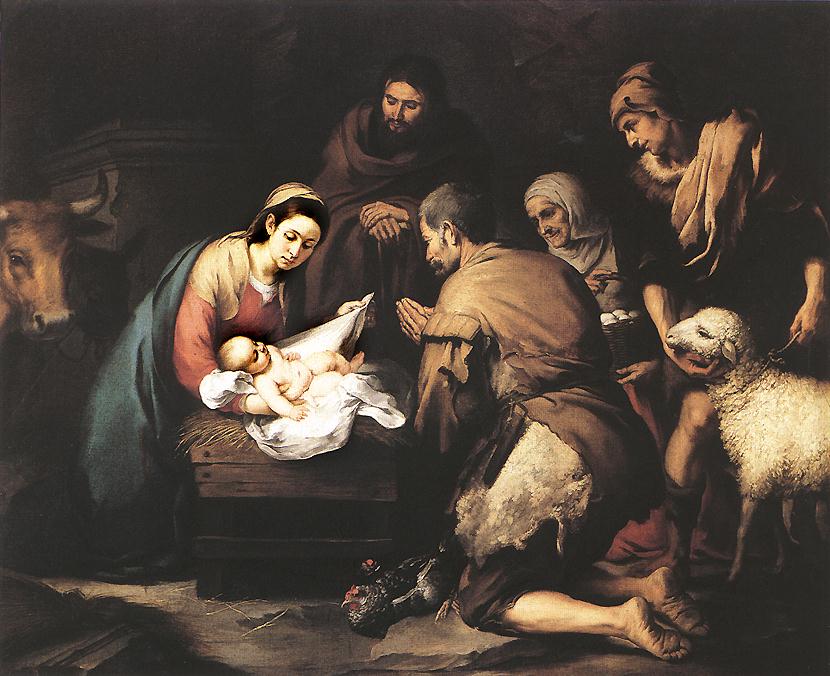
BartolomeEstebanMurilloAdorationShepherds

Homily for Sunday, October 12, 2014

Homily for the Twenty-Eighth Sunday of Ordinary Time 2014
Rev. James DiLuzio CSP

Reading 1: Isaiah 25: 6-10A; Psalm 23; Reading 2: Philemon 4: 12-14; 19-20
Gospel: Matthew 22: 1-14 (Printed Below for your convenience)

No One comes to the Table it seems. Not Congress, Not Business, Economists or Nations. 90 % of Scientists agree there is a human footprint on global warming; last month thousands joined a march here in NYC and around the world yet energy companies and many politicians continue to say, “You fools! Nothing is wrong. No one, no policy, no system needs to change!”

What are the signs of our times? No one comes to the table. The song of our age is that there’s no dialogue, only judgment. No self-scrutiny, only ideology. Look at the Sunni-Shi’ite warfare. No! No one comes to the table but each to his own (or her own) home defiant, unmoved and scared. Good News is often portrayed as Bad News; and Bad News is hailed as irreversible. No harmonies–no counterpoint to blend into a discernable tune. Factions fracture the landscape of Church and State, Foreign Policies and National Interests.

In humility we might acknowledge that one part of the problem, one small but significant piece of the puzzle came from the realm of Institutional Religion. For centuries, religious leaders and preachers assure the crowds of the rightness of their respective faiths, but failed to continually counsel charity, compassion and love of others beyond ourselves. Indeed, although charity may start at home it can stay there with no place to go! How else could family members disown family members who marry people from other faiths or leave one tradition for another? Why else would friendships and associations dissolve when some person suddenly believes or acts differently, or develops a new set of politics or priorities? Alas, global issues are global because they remain rooted in deeply personal, familial conflicts.

What’s the antidote? Where is the adhesive to bring families, religions and nations together? Have we given up on cultivating a cohesive enterprise to change the signs of the time or let fresh air, tone and spirit soothe despairing souls? Indeed, the biblical statement seems truer than ever: “And we like sheep have gone astray”, (1 Peter 2:25) Yes, that is how it seems, but, in truth, there is a solution to our isolation—a way far and beyond the status quo. It is this table. For here is a table to which everyone is invited. What’s more, the ONE who serves at this table will revive our spirits and shepherd of souls. The Kingdom is “Here Comes Everybody,” and “Everyone belongs!” But take care! He may only shepherd those willing to share His vision and to follow His example.

The Kingdom offers an antidote to rigidity by bending the rules of cult and tribe and institution through its invitation to a wiser, more all-consuming way of living—calling its members to collaborate for peace, mercy, justice –to find common ground in our common humanity because our God became fully human in Christ Jesus. If we are truly confident that Christ is with us, we can and must encounter all others who abide by different scriptures, traditions experiences, politics and beliefs and engage in collaboration on all levels, irrespective of our differences.

A challenging proposition. No wonder not all accept the invitation. Furthermore, all who come may not participate as fully as they could because we may not appreciate the wealth of spirit, wisdom and courage bestowed upon us in Word and Eucharist. What opportunities these provide! Possibilities, positive choices for today, tomorrow and the next day. To ignore these is disastrous. Such was the fate of the poorly dressed guest; better he had not shown up at all than to realize all the opportunities he had forfeited. So we must take care not to be neglectful as he was. We must not fall into the trap to look but not see; hear but neither listen nor understand, nor share in Word and Eucharist without full participation or conviction. (It’s not that God will throw us out! But that when we leave we will not have achieved the purpose for our visit! That’s the meaning of the parable—NOT that God is vengeful, vindictive and unforgiving. Remember the Bible used FEAR as its teaching tool because that was the custom in ancient civilizations—Jewish and Gentile both. Always when engaging in the Scriptures, we must go beyond this “fear veneer” to find the true meaning of a parable or passage, however frightful the image or language invoked. The meaning is this: appreciate your faith, engage in it and practice it– especially with those who don’t. Yes, all are invited but with our words and actions we must give them a reason to attend!

Jesus tells us “The kingdom of Heaven is in the invitation– a gracious invitation to a table filled with – as Isaiah prophesied – “rich food and choice wines.” And beneath the sumptuous offerings, that table is sturdy and strong, wide and expansive with an infinite number of table leafs and extenders. So: we’ve been invited and we have come. How shall we make this Mass most profitable?

First, allow yourself to be healed. Let your mind and heart experience the blessed assurance that God cares for you, cares about how you feel, what your circumstances are and makes no judgment on the degree of light and shadow in your heart at this time. Accept that God accepts us as we are, where we are and be filled with gratitude. Only gratefulness for such unconditional love can inspire us to let the Lord move us where He will and empower us to offer His unconditional love to others.
Second, recognize that this table/ our table is made of the wood of the cross. It’s the wood of compassion; a cross created to inspire– pity, empathy, forgiveness and reconciliation. It’s a table and it is a cross—both—to remind us that the feast has a price; the Eucharist does feed us and heal us, but it challenges us, too. The cross reminds us of REALITY: that engaging in charity for mutual benefit is painful; abandoning our illusions can make us feel week and discouraged; cultivating patience for dialogue within and among families, business and politics is exacting and exhausting. Still, the Eucharist assures us that all things are possible with God and with pain comes gain! Spiritual realities can and will address the earthly ones as we participate in ongoing dying and rising. Believe more fully in this process! Cultivate it and it will cultivate in you hope and make of us a revived, energized and courageous people.

Third, be courageous and pick up this cross in any way, shape or form that you know how. “Life is short” and “opportunity is not a lengthy visitor!” You have come to the table of Word and Eucharist. Taste and See what God has in store for you today and tomorrow, and through you, and through us—all of us—salvation for the world.

Reading 1 IS 25:6-10A
On this mountain the LORD of hosts
will provide for all peoples
a feast of rich food and choice wines,
juicy, rich food and pure, choice wines.
On this mountain he will destroy
the veil that veils all peoples,
the web that is woven over all nations;
he will destroy death forever.
The Lord GOD will wipe away
the tears from every face;
the reproach of his people he will remove
from the whole earth; for the LORD has spoken.
On that day it will be said:
“Behold our God, to whom we looked to save us!
This is the LORD for whom we looked;
let us rejoice and be glad that he has saved us!”
For the hand of the LORD will rest on this mountain.
Responsorial Psalm PS 23:1-3A, 3B-4, 5, 6
R/ (6cd) I shall live in the house of the Lord all the days of my life.
The LORD is my shepherd; I shall not want.
In verdant pastures he gives me repose;
beside restful waters he leads me;
he refreshes my soul.
R/ I shall live in the house of the Lord all the days of my life.
He guides me in right paths
for his name’s sake.
Even though I walk in the dark valley
I fear no evil; for you are at my side
with your rod and your staff
that give me courage.
R/ I shall live in the house of the Lord all the days of my life.
You spread the table before me
in the sight of my foes;
you anoint my head with oil;
my cup overflows.
R/ I shall live in the house of the Lord all the days of my life.
Only goodness and kindness follow me
all the days of my life;
and I shall dwell in the house of the LORD
for years to come.
R/ I shall live in the house of the Lord all the days of my life.

Reading 2 PHIL 4:12-14, 19-20
Brothers and sisters:
I know how to live in humble circumstances;
I know also how to live with abundance.
In every circumstance and in all things
I have learned the secret of being well fed and of going hungry,
of living in abundance and of being in need.
I can do all things in him who strengthens me.
Still, it was kind of you to share in my distress.

My God will fully supply whatever you need,
in accord with his glorious riches in Christ Jesus.
To our God and Father, glory forever and ever. Amen.
Gospel MT 22:1-14
Jesus again in reply spoke to the chief priests and elders of the people
in parables, saying,
“The kingdom of heaven may be likened to a king
who gave a wedding feast for his son.
He dispatched his servants to summon the invited guests to the feast,
but they refused to come.
A second time he sent other servants, saying, ‘Tell those invited: “Behold, I have prepared my banquet,
my calves and fattened cattle are killed, and everything is ready; come to the feast.”’
Some ignored the invitation and went away,
one to his farm, another to his business.
The rest laid hold of his servants,
mistreated them, and killed them.
The king was enraged and sent his troops,
destroyed those murderers, and burned their city.
Then he said to his servants, ‘The feast is ready,
but those who were invited were not worthy to come.
Go out, therefore, into the main roads
and invite to the feast whomever you find.’
The servants went out into the streets
and gathered all they found, bad and good alike,
and the hall was filled with guests.
But when the king came in to meet the guests,
he saw a man there not dressed in a wedding garment.
The king said to him, ‘My friend, how is it that you came in here without a wedding garment?’
But he was reduced to silence.
Then the king said to his attendants, ‘Bind his hands and feet,
and cast him into the darkness outside,
where there will be wailing and grinding of teeth.’
Many are invited, but few are chosen.”